For reference, this blog will go in detail about The Drama, and delve into spoilers. Its core premise is in of itself a spoiler. So maybe take a read once you’ve seen it, or if you don’t particularly care for spoilers.
What’s the worst thing you’ve ever done?
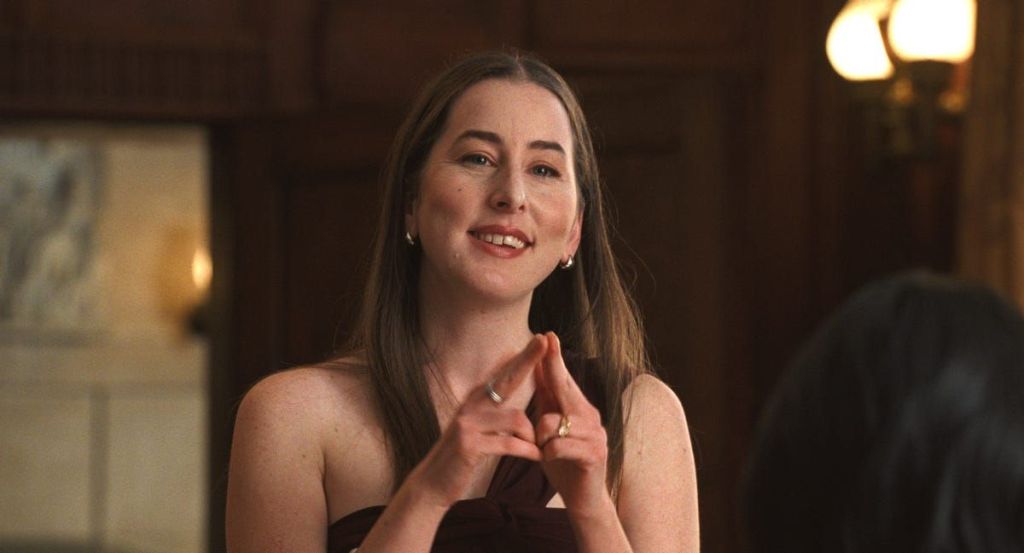
The inciting incident of Kristoffer Borgli’s latest film The Drama is at a wine tasting double date the week before the wedding of Charlie (Robert Pattinson) and Emma (Zendaya); Charlie’s best friend, Mike (Mamoudou Athie) is pressured into sharing the worst thing he ever did by his wife, Rachel (Alana Haim), but only under the pretense everyone else also shared theirs. This was something Rachel and Mike did before they got married, and so the activity was seen as a fun icebreaker to “truly understand” every part of the person you’re marrying. Of course such a question combined with alchohol is always a recipe for chaos.
Mike’s story is of having used an ex-girlfriend as a meat-shield against an aggressive dog biting them. It’s pretty bad but funny, Rachel attempts to back out of confessing hers but ultimately goes along with it. She admits that she had locked a “slow” kid in a closet in the middle of nowhere, and ran away, the kid not being found for an entire day.
Charlie doesn’t know how to answer this question, he can’t think of anything bad that is sensantionalised to the degree of these previous stories; a human meat-shield, or punishment that went way too far, these are moments designed to be told in this context and be laughed off with some wine and forgotten about. Charlie just ends up telling them that he severely cyberbullied a child to the point his entire family had to move. Whether that’s true or not, which I absolutely believe was something made up on the spot to feel included and be morally on their level, it reveals a lot about Charlie as a character.
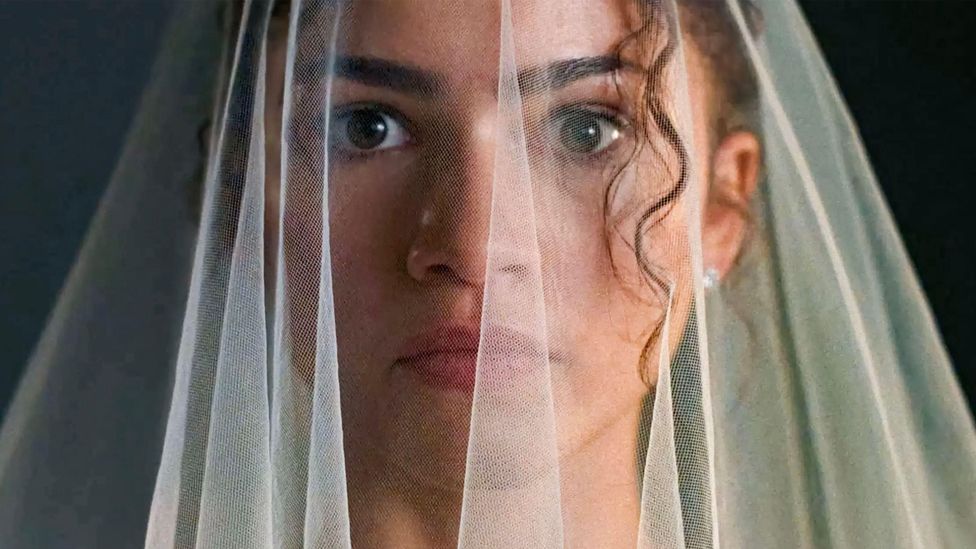
Finally, it’s Emma’s time to tell hers – this brings us to the part of the trailer that was edited around to keep secret, and it leaves a lot to the imagination. You can see Emma’s nerves and hesitation to tell them the true worst thing she’s ever done. It says a lot about her character that she actually goes through with it. Emma almost went through with a mass shooting at her school as a 14 year old girl. Emma’s hesitation was very indicitative of her comfort with the people around her. The act of admitting their worst actions lulls her into a false sense of trust in the people around her, but admitting this instantly changes the mood of the table.
At first they feel it’s a joke, or at least want to. Rachel instantly treats Emma as if she’s an irredeemable monster, Charlie tries to sugarcoat it or treat it like a layered joke. What ensues from Emma’s admission of her action, or almost action, really reveals the artificiality and hypocrisy in those around her.
Charlie
The Drama may base itself around Emma’s past, but it also feels like Charlie is the main character, because it is ultimately his spiral into madness upon hearing this information about his fiancee, someone he had a romanticised image of up until that point.
The film starts with a very romcom meet-cute – Charlie spots Emma and is instantly attracted. He sees she’s reading a book, so when she’s away from her seat, he quickly checks what book she’s reading, in order to have something to talk about. However, due to being deaf in one ear, Charlie’s attempts at chatting her up are completely unnoticed, which is humiliating. However, he is given the chance to start again and approach her. Despite his approach being given 2 chances, he still goes to the first date without looking anything up about the book that caused for a very memorable meet-cute of the two, showing the shallowness in the relationship right from the start.
Artificality – A perception of perfection..
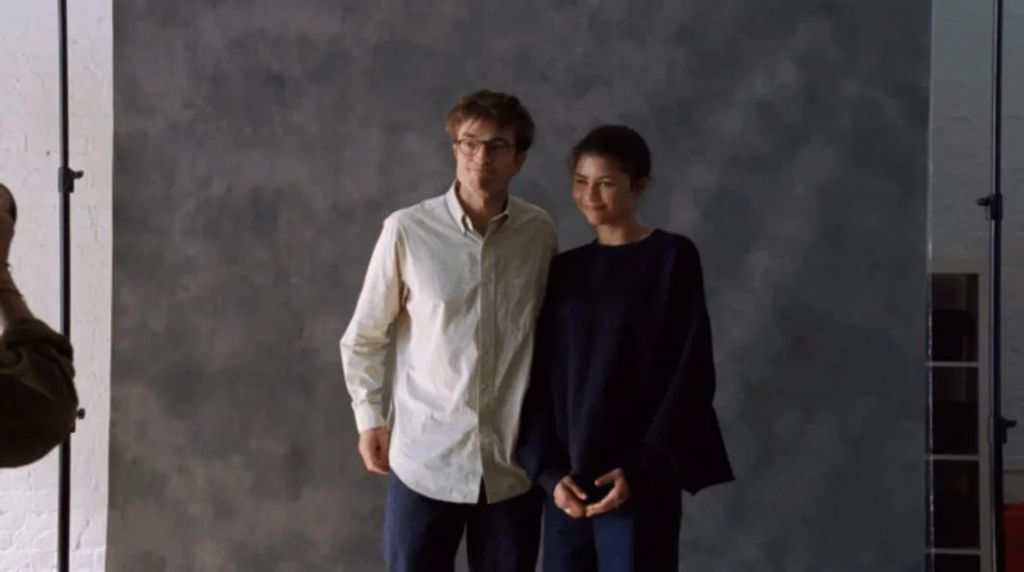
Centering the entire film on a wedding is the perfect way to exemplify a level of shallowness and artificiality in facing up to home truths and allowing for complex issues to be discussed with care. Charlie and Emma’s relationship on the surface seems very generic, we don’t ever get a sense of why they love each other, or why we should care for them as a couple. Charlie is trying to write his speech and it tells you nothing about Emma as a person, instead it’s just about her empathy, how kind she is, a dig at her laugh and then a reference to how good their sex is.
The image of the wedding needs to be perfect and as their choreographer says, it’s a performance, and using this imagery as a contrast to the complete unravelling of Charlie’s sanity is a really great way of showing how superfluous Charlie and Emma’s relationship actually feels.
Charlie can’t get out of his own head about Emma’s actions, desperately trying to find a deeper meaning to her intentions, yet refuses to have a proper conversation with Emma about it.
Ultimately, his failure to communicate with her is what makes the spiral worse. Charlie’s perception of Emma is completely shifted — before the inciting incident there is a reason why the wedding and the relationship feels so artificial, it’s because there’s been no communication between the two delving into their true selves, and instead this performance of themselves; Charlie pretending to read a book to get Emma’s attention, but Emma actually opens up and tells Charlie something about her past, and it completely shatters this perfect image, and forces Charlie to see Emma as a complex human being.
Emma only tells Charlie this after being lulled into a sense of trust and safety to do so, because her even contemplating shooting up a school is so unspeakably heinous and an ongoing issue in the public consciousness, that the admission of even thinking about doing that is too difficult to discuss and instead of opening up a discussion about it, it’s straight to dehumanising them or dismissing them. Obviously, that’s not to say her actions or thoughts can’t be objectively wrong, but a lack of thought and care in discussing them becomes too black-and-white, and feels as shallow as the relationship is in the first place.
Emma is a human, and not a prop, and by finding out about her past and who she was, it forces Charlie to change the way he perceives her, which he just cannot get over no matter how hard he tries.
In addition, while Zendaya’s role was reportedly colourblind, there is something really interesting in the social context of Charlie and Emma as a couple and in their actions. A black girl is not the perceived type of school shooter, and it’s that aspect of her that makes it feel unreal, and makes it so hard for Charlie to understand how it happened.
Charlie is British, and gun violence is controlled in the UK, so our idea of gun violence is far more from the third person, especially compared to Rachel, that has a first-hand experience with the impact of gun violence – Charlie doesn’t know about the ways that guns were a persistent iconography in schools; how kids had to prepare for the possibility of it happening to them, and how guns had been used to create an aesthetic, a cool aesthetic that primarily acts as a rebellion, as a safety mechanism. Even to this day, nothing has changed, guns are seen as a human right. Charlie can’t possibly understand how a kid who was bullied heavily, felt completely lost and isolated, can get caught up in an ideology, a rebellion. It’s especially funny how this is contrasted with Rachel’s racial profiling of Mike, making up a fear of guns to make a bigger deal out of Emma’s actions.
Rachel
Despite Emma almost doing something truly heinous, the closest we get to a villain in The Drama is Alana Haim’s Rachel. A spiteful, hypocritical, artifical character. She spends the entire movie essentially torturing Emma over her mistake, threatening to pull the rug underneath her. But I find it so interesting from what position she’s coming from in doing so. Her reaction to Emma’s confession comes from a place of deep offence because she has a cousin in a wheelchair because of a shooting. That definitely gives her reason to be against gun violence on principle, but it definitely brings home this sense that Rachel is intentionally overreacting, and being offended on behalf of others who are directly impacted, with the level of intensity as if it was actually her. She has propped herself on a high horse and uses that information to present herself as on the right side of history.
Even before Emma’s reveal, Rachel seems to only be friendly with Emma as a courtesy, it really comes off as if Rachel only saw Emma as a person she has to be friends with since she is the wife of Charlie’s best friend. Rachel even makes a snide comment about how she was surprised Emma even asked her to be maiden of honour, implying she felt like it made Emma seem like she had no one else. Rachel overall feels very obsessed with the image of things. Further exemplified by her story of Mike’s trauma with guns that don’t exist, and her decision to ghost Emma’s boss despite her committment to collaborating with her employer, based on how disturbed she was by what she heard. She is entirely concerned with how she looks and she, like many chronically online people, gets too intensely involved in other people’s drama. She feels the need to have an impact on it, she wants to let people know she doesn’t approve it.
The funniest part is that Rachel’s own worst action is actually quite bad, and actually is something she went through with, but it’s laughed off..
Taboos – Can I be in love with a psychopath?
When tackling a subject such as mass shootings, it’s absolutely going to cause controversy and raise some eyebrows, and the choice to withhold the fact that the movie was about this doesn’t help. Arguably, I think that was the best choice for marketing this movie. It thrives on seeing you react to this information and process it in real time. It is ultimately a test of your morality and how your perception also changes for Emma. I think at its very core, the reaction to this film was very intentional, because it’s taboo, which is what incites this spiral and visceral reaction.
I mentioned it earlier, but culturally, school shootings happen so often, but it feels like it’s a topic you can’t talk about in a way that potentially humanises the person behind that act. And I am absolutely not justifying their actions, but my point is, Emma is a human. She is a normal girl by all means before this, and as she says as well, there are so many people out there that have almost done the same thing, and live with the knowledge, and nobody knows.
When you compare the actions of the characters in this film alone, you have Charlie’s struggle to find a truly bad thing he has done, and chooses to potentially make up bullying someone so intensely that it makes their family move away; joke or not, that is laughed off as kids being kids, but that action if true is very bad. Rachel’s is even worse, and is also laughed off, and not even properly judged. The implication is that as an adult she just locked a mentally disabled child for little other reason than he was being a bit annoying, and his screams for help scared her away. There had to be a search party to find him, because she never told anyone, and she lives with this, not knowing the consequences of her actions, and also treating it like it’s just a funny story – she was an adult and she traumatised a child, who knows what could’ve happened, she doesn’t feel bad about it really.
Does that make her a sociopath? Irredeemable? Evil? To be honest, no. It’s pretty bad, but the only reason I highlight this is, Emma didn’t actually go through with her plan, she is permanently deaf in one ear as a consequence, and she took quite the turn to becoming a full on gun violence activist in the aftermath of a seperate mass shooting. Emma has had a lot of time to understand the weight of her situation and work on herself, which is why she is not that person now. She is at peace with herself, and doesn’t ever sugarcoat her action. But there is no growth with Rachel, she thinks her actual action where she traumatised a child makes her morally superior.I
I feel this entire point comes off as if I’m saying Rachel’s action is worse than a mass shooting, but I’m not. It’s less about the action itself, and more the personal growth, the perception of the situation, the consequences. Generally, Rachel’s actions aren’t going to cause a drama quite on the level of Emma’s, but the mention of comparing the two is seen as unspeakable, proven by the response to this movie.
Those affected directly by gun violence absolutely have the right to be unhappy with misleading marketing bringing up trauma. My point relies mainly on Rachel that exerts her cousin’s trauma onto herself to make her feel morally superior.
Another question at the core of this movie is if Emma is a psychopath and if she should be trusted. There is this constant threat of calling the police as a response to the information, as if an action that didn’t even happen over a decade ago is grounds for arrest, as if Emma shows signs of choosing to do something like that again. Charlie doesn’t want to be in love with a psychopath or someone he views not as a human. A school shooter is never treated as a human and more as a great evil. These people are deeply disturbed and absolutely deserve punishment for their actions, but you have to consider what leads them to do something like that. By stripping back their humanity, it is exactly how they were brought to that heinous action, often feeling outcast and needing to make an impact. So many of these shooters will also kill themselves, it really isn’t constructive to ignore the reasons why someone would do this.
We see some of Emma’s past in flashbacks, and that version of Emma is all Charlie ends up seeing as he tries to make things normal again. He wants her past self to have had an inciting incident so ridiculously traumatic that the response is equally big; the truth is, it is relatively small reasons but they amount to a lot at that age and within that cultural zeitgeist.
Emma
Emma is an interesting character because we do see her past, the film is about her actions, but it feels like we don’t get as much of her reaction to the situation. We don’t really see too much of how she actually is as a person in the present day. We basically watch from Charlie’s perspective, unsure if the film will reveal that she has actually hidden a killer streak still ongoing. Charlie’s speech calls Emma empathetic and kind, in the generic sense before he finds out about her past, and removes it once he does, but over the course of the film, it really feels like Emma actually is kind and empathetic. Before this wine tasting dinner, Charlie and Emma see their DJ using heroin, and it’s interesting how instantly understanding and forgiving Emma is in comparison to Charlie. Emma knows firsthand the complexities of morality and your actions and doesn’t really want to fire her. Charlie is aimless, and seems to only want to go by the social norm, following advice from his friends, he doesn’t seem to have an opinion it beyond that.
Even from the start, Emma is shown to value second chances, giving Charlie many, even later into the film..
Second Chances – Can we press the reset button?
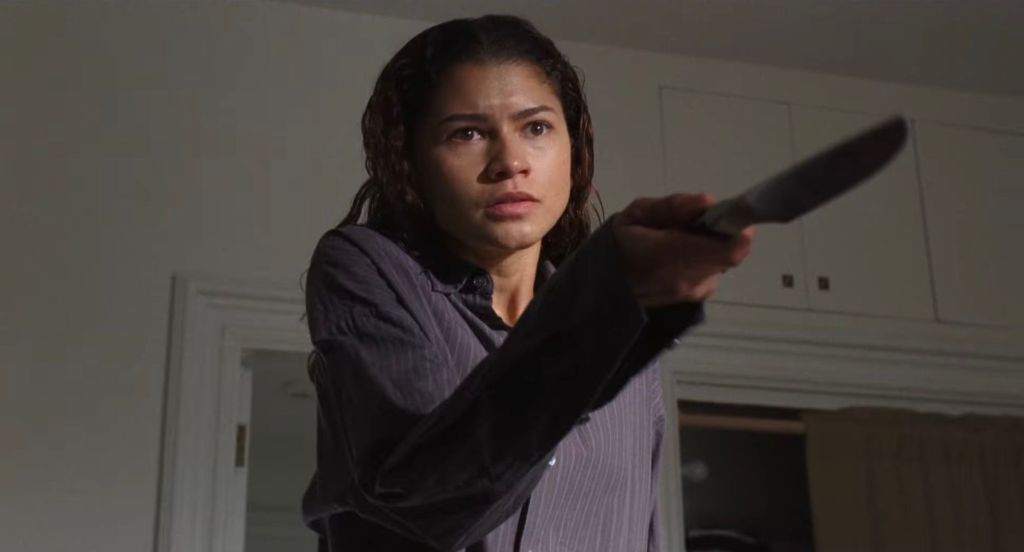
Fundamentally, The Drama is a film about second chances and the importance of that in a relationship. In the end, Charlie is given a second chance for making a complete disaster of the wedding and cheating on Emma.
In pursuit of understanding, Charlie turns to his colleague, Misha (Hailey Benton Gates) for emotional support and advice on what he should do in his unique situation. Charlie, in a moment of weakness, starts making out with Misha and ripping her clothes off. He can’t go through with going any further, but the sabotage of his relationship in that moment feels like a subconscious rebellion, he is doing the worst thing he can think of, maybe as a way to balance the scales in his mind.
As a result of Rachel’s appearence at the wedding, appearing to tell guests about Emma’s secret, Misha’s mention of Charlie’s hypothetical makes Emma grab her to clear things up, but Misha thinks it’s about their kiss, and all hell breaks loose from there. That central wedding is a bigger disaster than what seems conceivable, as a physical representation of the crumbling relationship that needs a reset, needs mutual understanding and communication.
Even through all of that, and even Charlie’s very public embarassment, Emma still accepts him and forgives him. He allows Charlie the option to reset and start over. I like to think it comes from her understanding of how the wedding ended up the way it did as a consequence of her own actions. She is able to own up to them and change, something nobody else in this movie does about their worst thing.
Even as a kid right after she was about to commit the most heinous crime, she was able to cry with her bully and see her bully as a human. She found her people advocating against the extremes she almost went to and she went from saying she’d kill her bully first to accepting her.
The Drama is a film I really enjoyed and would like to rewatch. It had me really thinking, and I love when a film does that to me. There are just so many layers to it, and Borgli handles it really well. I found it funny at moments, stressful at others but kind of cathartic too. It’s a lot of very important conversations that need to be had.
But do you think Emma deserves a second chance, or is she defined by one moment, condemned for life? Let me know.
 Newton's Law
Leave a comment