Category: 2026

  • Resident Evil – The Art of Adaptation

    Resident Evil – The Art of Adaptation

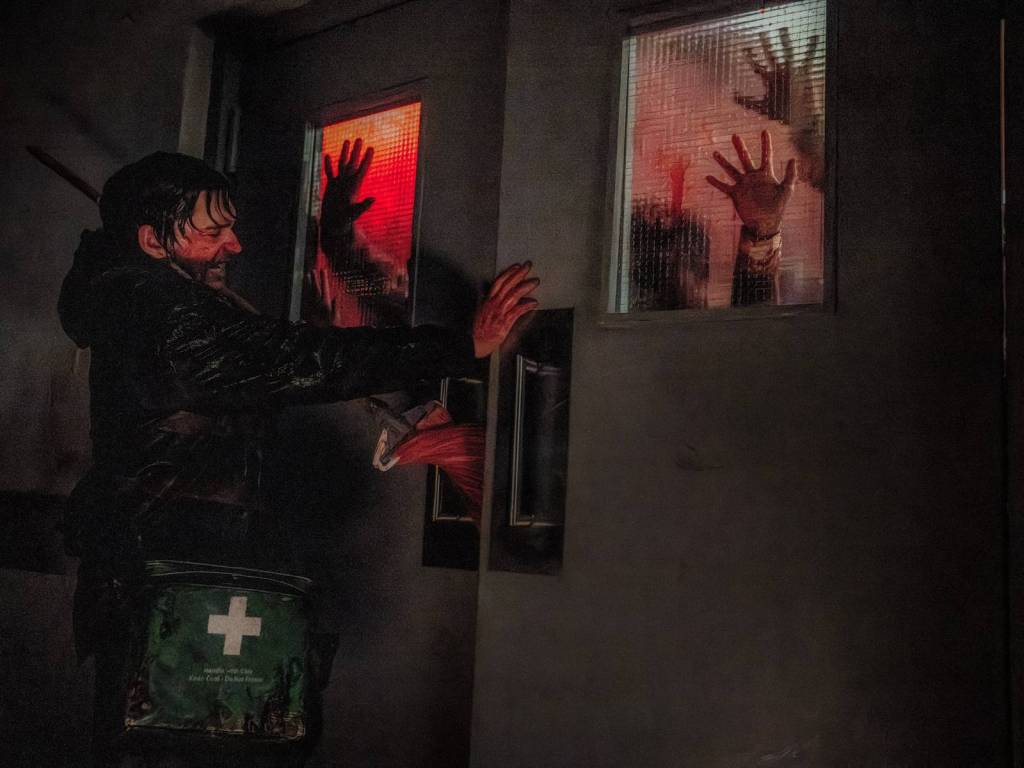
    Zach Cregger’s Resident Evil comes as the third film in his directorial career, all within the span of about 4 years. Barbarian is one of my favourite horror films and Weapons was a great success and also a really great film. Cregger claims he came up with Weapons, Resident Evil and his upcoming The Flood all in one creative burst after finishing Barbarian — I’m very intruiged by The Flood, but Resident Evil was an instantly exciting prospect for me. Earlier this year I finally decided to get into the Resident Evil series in preparation for Resident Evil Requiem.

    I ended up absolutely adoring the games I played. What I love about Resident Evil is its variety in perspectives, locations and even tone. Resident Evil 2 (remake) had a constant sense of dread with Mr. X following you around with no pause for your maze throughout the RCPD and surrounding areas. Resident Evil 4 was far more action-based, being set in Spain and the vastly different locations you visit including a castle, boating across to islands and a horrifying underground lab. All of these locations accompanied by very corny villains, but it works. Resident Evil 7: biohazard even completely reinvents the tone and feel of the series with first person perspective, and much more of a focus on this singular family infected by the mold in their house, the main character is just a regular guy trying to find his wife.

    All that to really exemplify the vast variety of appeal in the Resident Evil brand.

    How do you go about adapting Resident Evil to the big screen?

    Well that question has split Resident Evil fans for a while. Paul WS Anderson made multiple, but it starred Milla Jocovich as original character “Alice”, and while it does feature Resident Evil iconography, these are mainly early 2000s (into 2010s apparently) action spectacles. They tried making an “extremely faithful” one with Resident Evil: Welcome to Raccoon City by merging 3 whole games and casts into one 2 hour film.. it didn’t work unsurprisingly.

    Resident Evil the film franchise vs Resident Evil the game franchise have completely opposite reputation, and due to that it’s even harder to really start from scratch with a new take on adapting the games. Resident Evil has prestige to it, yet these films are seen as awful and oversaturated. It’s a tough undertaking, one that Zach Cregger decided to take. In a way, the shift to a director that commands the conversation of the film almost as much as the brand itself is smart. There’s an element of my excitement for this film that was because of my interest in Cregger as a growing filmmaker, and my trust in his choices, as well as my general fandom of Resident Evil.
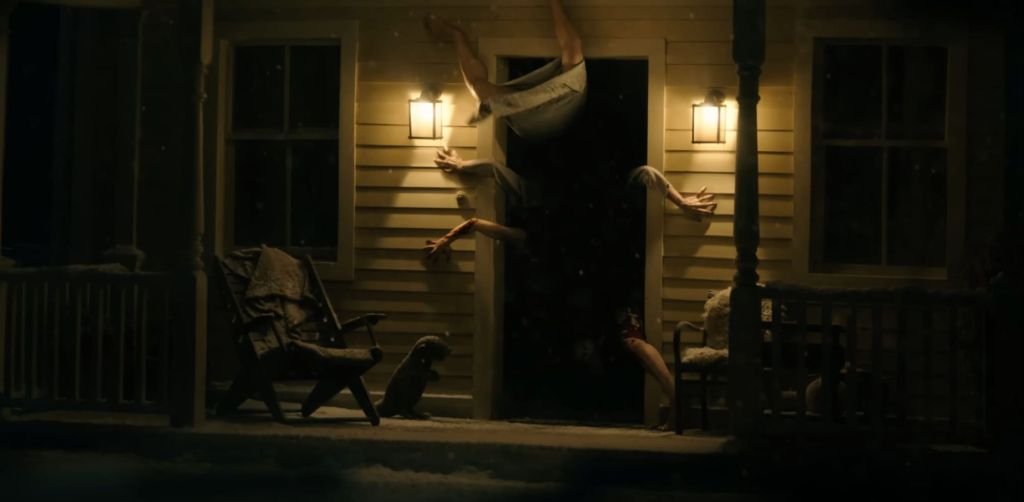
    However, I come from a perspective of loving films and video games. A lot of Resident Evil fans have really dug into Cregger and examined his every word to prove he is actually a hack. Cregger is a fan of the series which should be a good sign, but to fans he is too surface level to claim he is “one of them”.

    Cregger’s Resident Evil features only a handful of direct references to the lore and story of Resident Evil at large. The main character is supposed to be an NPC in the games, an organ delivery man for a hospital, and he just gets caught up in the Raccoon City outbreak on accident. So, Raccoon City is a major part of this film, and we even visit it, and the Umbrella Corporation are responsible for it.

    Cregger takes liberties with the established timeline, because had this film been set in the 90s and not been snowing, many fans would’ve been able to take what Cregger was putting down here, but that one creative liberty goes against the game and thus proves it’s a very seperate thing. Cregger did specifically claim the film took “alongside Resident Evil 2”.

    It’s fair to be hesitant, seeing your favourite games adapted in a format more people are going to see and potentially change up the fandom as they know it. Gamers have a very set way of how things should be represented, and messing with the identity of a series, huge changes don’t go over very well. This is especially true for Zelda, Wind Waker was hated to no end when it first got revealed. Similarly to Wind Waker, Cregger’s Resident Evil has had many pre-judgements and strong opinions that it truly feels like the decision was made on the film when that first trailer dropped.

    How Cregger succeeded in adapting Resident Evil

    The video game movies of the past few decades have repeatedly failed to understand the appeal of the games they’re adapting. Arguably, the most successful ones have been entirely different takes on their respective series. The Sonic films for example have been pretty successful, and it took until the third movie to essentially adapt a game’s story into those movies. Before they largely were just Sonic in the real world. I was partial to Pokémon: Detective Pikachu, I really felt taking the detective story approach allowed to show off an aspect of the Pokémon universe that isn’t commonly shown. Neither of these are particularly concerned with adapting the feel of their respective game series’ but they’re appealing to the iconography of them and sharing their world with audiences who may be unfamiliar.

    If you look at some other video game adaptations, like this year’s The Super Mario Galaxy Movie that I enjoyed purely from a fan perspective but it is literally just a compilation of every recognisable element of Mario crammed into one relatively incoherent mess. Comparing that to A Minecraft Movie, it’s the exact same issue, you’re smothered with references and plots designed in a lab to appeal to lowest common denominator while also being a guaranteed hit with fans. This conundrum is the exact opposite of many earlier adaptations, like DOOM (2005), Super Mario Bros. (1993) and Monster Hunter (2020) that are almost embarassed to be based on video games, trying to be serious or taking away so much from the original games that you question why it’s based on the game to begin with. Or it’s just dull in Monster Hunter’s case as well.

    So, all that build up is to say, this has been a heated debate among Resident Evil fans — does Zach Cregger’s Resident Evil deserve that name? Is it actually an adaptation or is it just putting that name on for more views. Well, firstly, Cregger probably doesn’t need the franchise bump for his films as Weapons proved successful a year prior, but also when watching the film it’s really  a quintessential Resident Evil-feeling film.
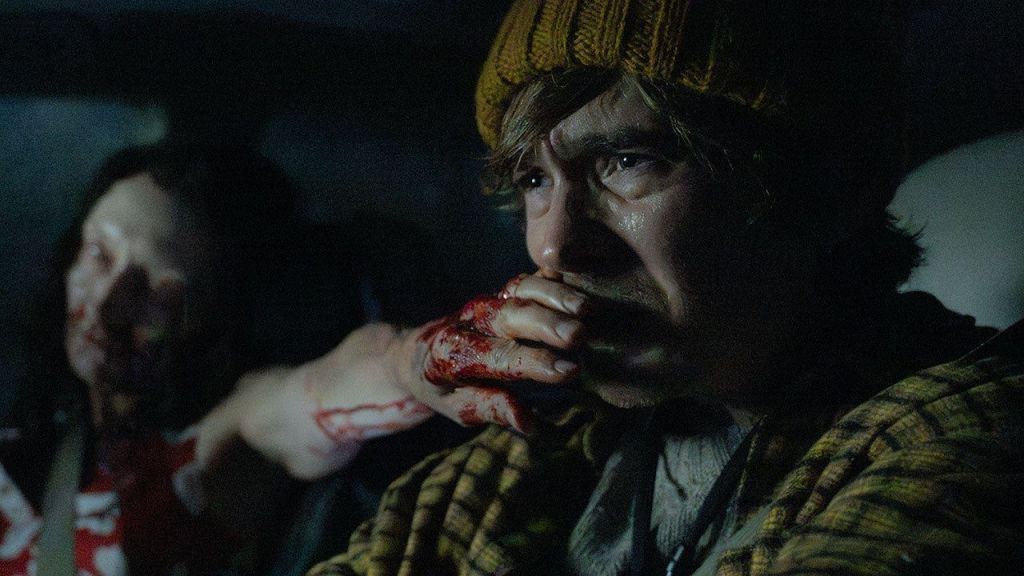
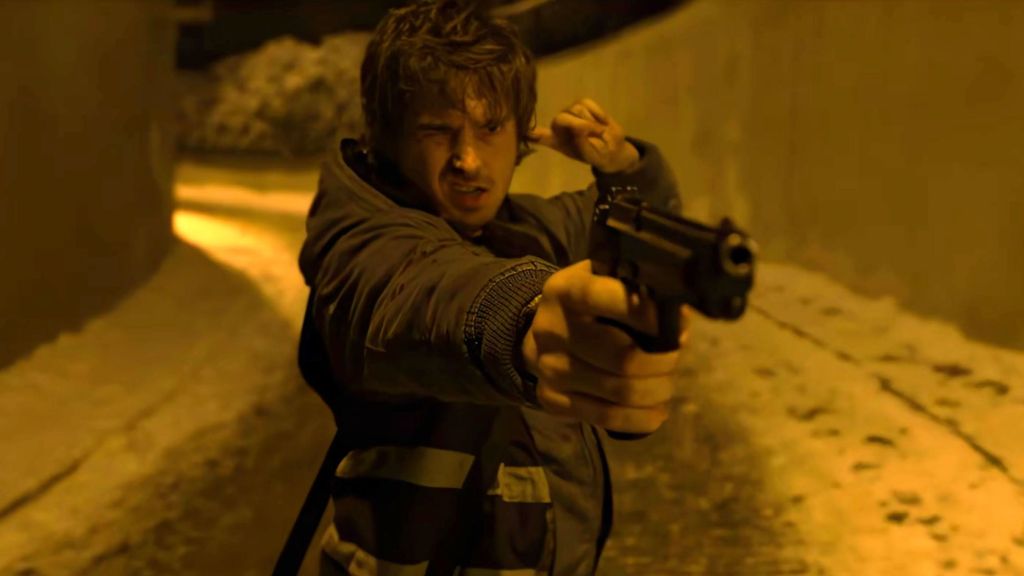
    No, there aren’t any characters from the games, and Cregger takes many liberties with the setting, clearly implying the events of Resident Evil 2 are now in modern day when it’s snowing, but regardless of that, it doesn’t really impact the intent of the film. And the intent of the film is this constant journey deeper and deeper into a bad situation. It’s Bryan’s worst ever day and yet it literally does not stop getting worse progressively. Unlike many RE protagonists, Bryan, played by Austin Abrams by the way, is an average person, and not trained. Honestly, Bryan is designed as an NPC in one of these games you wouldn’t follow, but in a way Bryan is also kind of us as a player inserted into this narrative. He has to adjust to his situation, find ways to pass locked gates, find ammo, get progressively better weapons, endure a sewer level and so much more.

    I feel the film hinges on Bryan as a character, and I felt the film delivers on that thanks to Austin Abrams. He plays Bryan so funnily, but also earnestly. I love how Cregger centers the entire narrative around Bryan’s unwillingness to settle down and choose his future as he remains in limbo with his girlfriend as he won’t make a decision on whether she should keep the baby. Bryan is punished for this by being forced into a situation where his life is very much in danger and he is forced to come to terms with what he actually wants. I love how the film takes the stalker enemy concept from the game and makes it a metaphor for Bryan’s indecision and internal conflict, a nuclear family literally rolled into one chasing Bryan.. his demise ultimately coming from the desire to protect a child from danger. It all harkens back to my favourite Resident Evil narratives being personal and exploring a character’s psyche.

    In a way that no other video game adaptation that I’ve seen, Resident Evil just really emulates the feel of playing these games while not having to directly adapt a certain game or character to do so. Resident Evil doesn’t always have the same cast, and while the ensemble has increased and Capcom do often bring back characters, these games are so different from each other but there is an undeniable quality to a Resident Evil game and it’s just in the DNA of them. I feel Cregger really understood that DNA and put it in his film. I honestly felt like I was experiencing a Resident Evil film through the film, and a great one at that.

    At a tight 90 minutes, it really hits all the beats and felt like a playthrough. The ending honestly made it feel like it was a bad ending route, where Bryan as a player stand-in was punished for his actions during the campaign and how it caught up with him. While there is so much humour in this film, it leaves you feeling a little depressed because it’s really a tragedy but that’s what’s most impressive to me is Cregger’s balance of tension, emotion and brevity and none of these three aspects undermine each other and instead are precisely why this works as they benefit each other.
    ★★★★½

    Excellent

    Resident Evil (2026) is an incredible achievement in craft but also tension, and successfully emulates the tone and feel of Resident Evil without having to be a melting pot of references and cheap copies of already existing games. It’s not just a great video game adaptation, it’s a great movie and an incredible horror movie and more video game movies just need to be actually good movies on their own before they start taking off.
  • The Shallow World-Building of ‘The Dog Stars’

    The Shallow World-Building of ‘The Dog Stars’

    This is my first blog in a while again.. as I said last time, work kind of killed some of my motivation to sit down and write. However, a shift in my daily routine means I’m going to try my best to get a blog out once a week.

    Anyway, preamble aside, I have seen many films this year since my last review of ‘The Drama’. Some I will do a post on as I feel they remain relevant, others I may mention as part of other articles where I see fit. I wanted to write about The Dog Stars, a film that I found to be utterly mediocre, but have quite a lot to say about why I feel that way.


    Ridley Scott, director of The Dog Stars, has not exactly been on a good run in recent years. Outside of The Martian and The Last Duel, nothing has really hit. Even then, The Last Duel flopped and isn’t really discussed much. Scott’s sensibilities seem to no longer align with audiences or critics. Of course, not everyone feels this way and you are entitled to love his recent work. However, when you compare it to his classics: Alien, Blade Runner, Thelma & Louise.. recently it’s mostly misses and the rare hit.

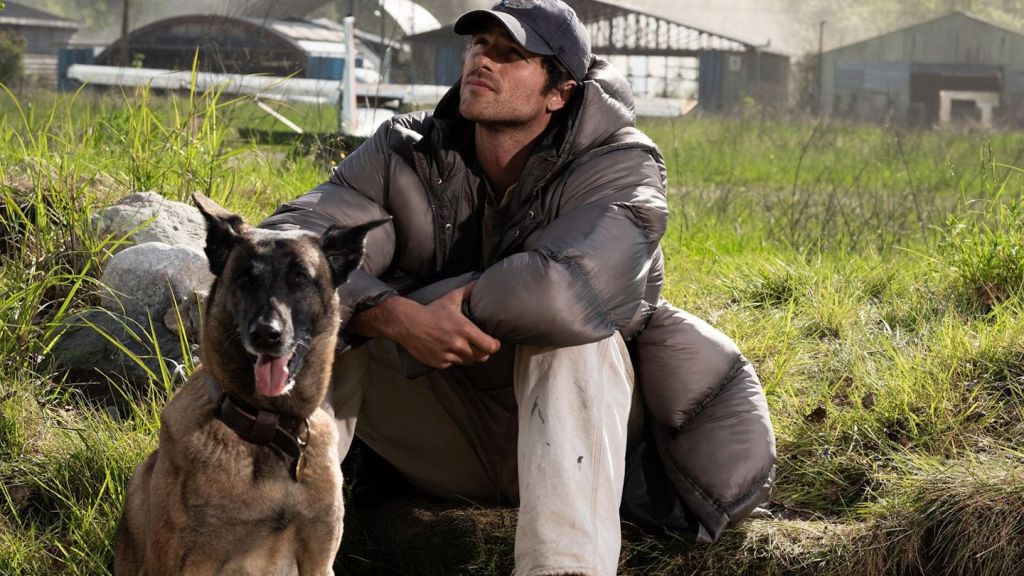
    Unfortunately, The Dog Stars is not a hit. Lead by Jacob Elordi as Hig, a mechanic that is surviving in a post-apocalyptic Canada that took the majority of its population including his wife and unborn child, he has ambitions to visit the Grand Junction as he thinks it may be where he can find true human connection and not have to fight to survive every second of every day. Josh Brolin’s Bangley is Hig’s stand-in father figure, but his interests are purely survival instincts, leaving a lot of his emotions and desire for connection under a tough exterior.

    I don’t think this premise is necessarily a bad one. I mean, it was a book beforehand, and I’m unsure of the reception to the source material, but Scott’s adaptation of it comes off as extremely bland. There are a lot of concepts in this post-apocalypse that I was waiting to find out about or see more of that amount to nothing, but nothing is put in their place, and it just ends up being aimless and boring.


    Found Family at the End of the World

    The core theme of The Dog Stars is very clearly stated as a longing for connection in a time that has destroyed all connection. Hig, having to deal with his immense grief, is struggling to cope. That lack of connection and communication is only made worse by the constant gatekeeping and violent nature humanity has been left in. Anyone who enters their camp, Bangley instantly kills regardless of their age or gender before they can humanise themselves.

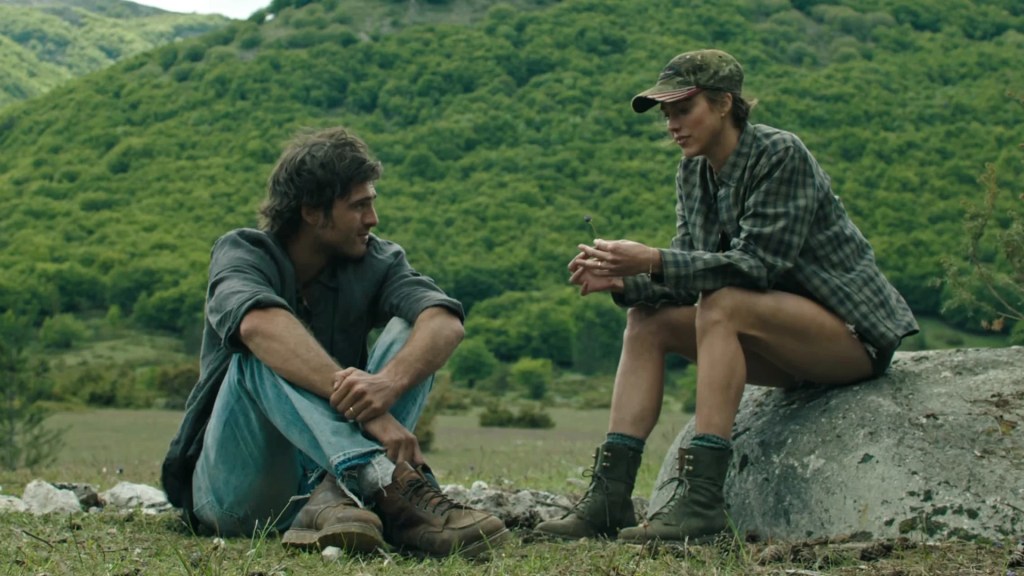
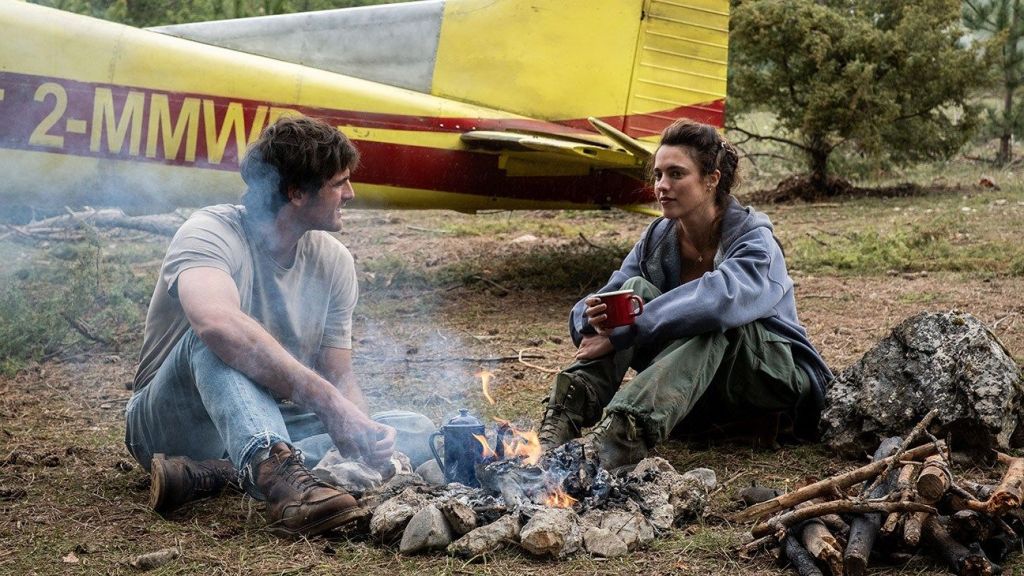
    Hig’s journey to Grand Canary is to rectify this. Maybe there is a part of this bleak world with people that won’t shoot point blank on sight alone. On his way though, he has issues with his plane and it has to emergency land in the mountains. It happens that he has found himself at a ranch guarded by Guy Pearce’s “Pops” and his daughter Cima, played by Margaret Qualley. Pops is not exactly welcoming in the same way that Bangley would be; Cima, however, seems to be less on-guard about Hig. Hig and Cima are similarly nostalgic for the old world and both grieving their spouses, both powerless to the apocalypse.

    This was my favourite part of the movie, I quite enjoyed the dynamic between Hig, Pops and Cima, and how Pops eventually warms to Hig. The script doesn’t really do much with it though, we have a couple of vague conversations discussing the old times, discussing their depression and longing for connection but the surface level is the ceiling in this script, and it’s moved on from. Elordi is a great actor but because he’s given nothing, he comes off as incredibly bland here you find it hard to get a read on him, he feels like a generic lover-not-a-fighter widower. Pearce gets to be pretty funny, which is to his benefit, as with Bangley with Brolin, his character is quite funny. However, it leaves me wondering what the purpose of Bangley is in this narrative. He is the antithesis of Hig but he is like a father figure to him, yet Hig leaves him and finds Pops, another father figure to him. Bangley is relegated to an odd subplot I will get back to.

    As much as I love Margaret Qualley, Cima is given even less in this screenplay than the other characters. She represents Hig moving on with his life and finding something or someone to live for. I just wish I understood her motivations and her backstory more. I wonder if this story would benefit from being about Pops and Cima instead of Hig as those two have far more intruiging characters but I was left wanting more from them.

    Overall, though, I found the found family element of the film to be the one part I could cling to and it certainly helps this film a lot. I just feel as though it’s too shallow to make the film work and especially when the post-apocalypse the entire narrative is built around is a complete mess.


    A Hot Pot of Post-Apocalyptic Concepts

    Again, I haven’t read the book this is based on, and I’m sure most of these concepts the film takes are in it, but to what extent I don’t know. The Dog Stars‘ apocalypse was a virus taking away a bit over half the population as far as I understood. It’s set in 2035 so it’s near-future. However, there were several other moments in this film that suggested other issues in the world. For example, these primal marauders that were referenced a few times to be killing those who survived, and attack Bangley’s base, and are nowhere to be seen after that.

    When I heard about these marauders, I assumed they’d be pivotal. This concept that there is a group of extremists that are killing survivors of this devastating global pandemic, why are they killing them? What are their beliefs? I understand that not everything needs to be explained or show up in a world you’re building up, but in a story of connection and grief, a group of people who have dedicated their life to killing survivors of this virus could fit in this narrative quite well. The extent of their narrative function is some cryptic wall painting seen by Hig in the start, mention of them coming for them, and then that Bangley scene where he singlehandedly fends them off and kills them. If one character can fend them all off, I don’t see what the point in hyping them up is? Was their role in the story to give Josh Brolin a scene? Admittedly, it’s a fun scene and it doesn’t fit the rest of the film at all — that’s not really the tone of the film that is aggressively somber and personal.

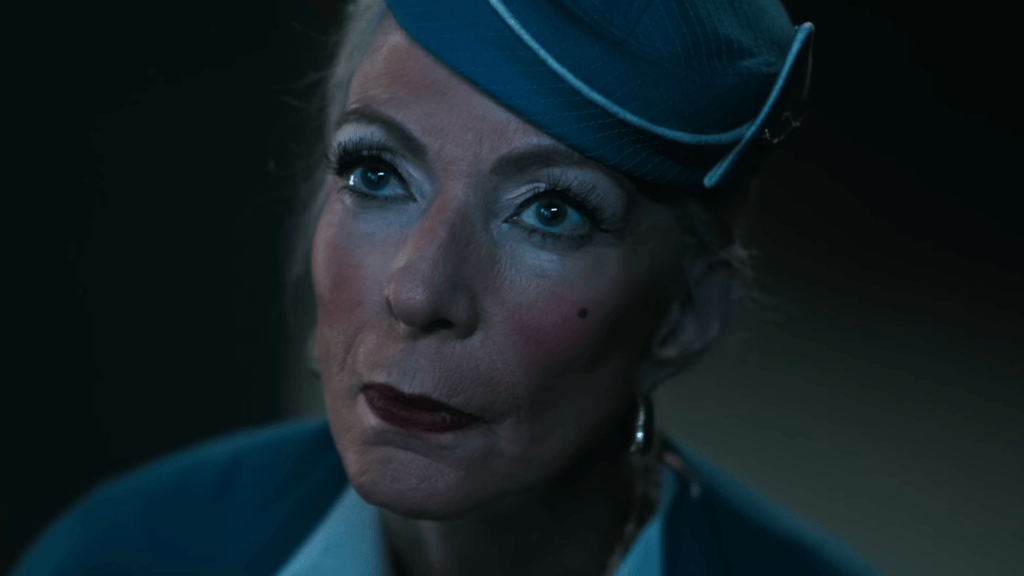
    In addition, when we do eventually make it to Grand Junction, we find a millitary guarded vault with Allison Janney dressed in a flight attendant suit, a remnant of her previous life. Assumedly, this would be a vault for the survivors to hide from these marauders but it doesn’t really seem like that’s the angle here, the people in this building are all old, it comes off more as a retirement home, and a fake recreation of old commercial America. I found that fascinating, she also states she wants to rebuild the world. This part of the film contrasts drastically from the empty mountains and abandonded cities, but it’s a natural contrast. Maybe it’s just the stories I watch, but finding people desperately clinging onto the past, using old technology post-apocalypse makes sense. I was excited to see how this was going to be explored.

    Ultimately, all it amounts to is what felt like a 10 minute sequence where they are put in danger by Janney’s character ordering Cima get married away, and Hig and Pops killing everyone and blowing up Grand Junction as a whole. I’m unsure if I was just seeing things but it even seemed like the people in Grand Junction were robots… like, if I’m not being stupid and that was actually true I would’ve loved to see more of Janney and her motivations… but she’s killed as quickly as she enters the narrative and it makes the entire section seem pointless and just added to have more explosions.

    On paper, having all these concepts in one world could be interesting. Scott didn’t convey it very well and the film’s world feels generic with random concepts just thrown in for exciting setpieces. I’m certain these parts of the world are most likely explored in the book. On the big screen, it is just a preview of ideas, overwhelmed by a generic and bland world with the  skeleton of a story about human connection.

    It’s hard to really connect to characters when you have no grasp of their world or their histories — and no, dead wife flashbacks aren’t a Get Out of Jail Free Card..


    5/10

    Mediocre

  • ‘The Drama’ – Artificiality, Taboos, and Second Chances

    ‘The Drama’ – Artificiality, Taboos, and Second Chances

    For reference, this blog will go in detail about The Drama, and delve into spoilers. Its core premise is in of itself a spoiler. So maybe take a read once you’ve seen it, or if you don’t particularly care for spoilers.


    What’s the worst thing you’ve ever done?

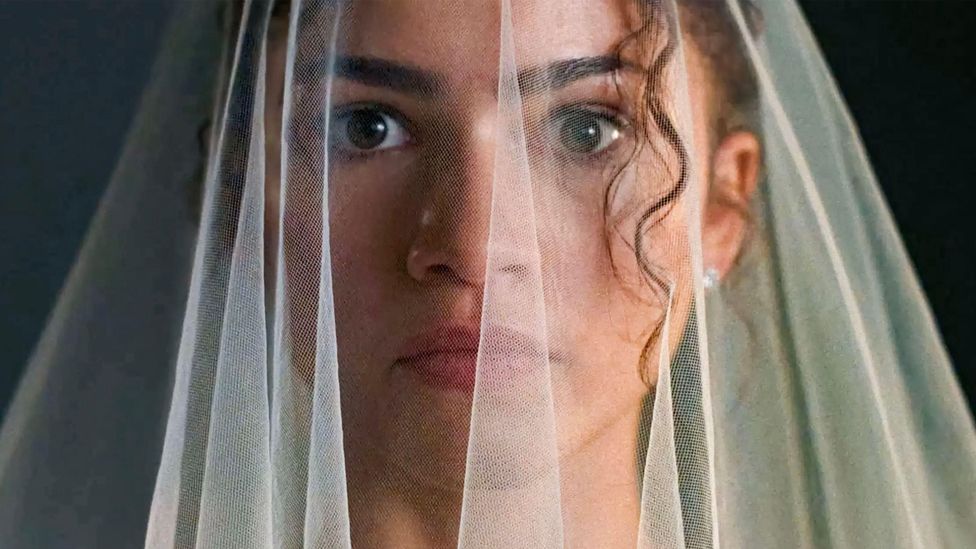
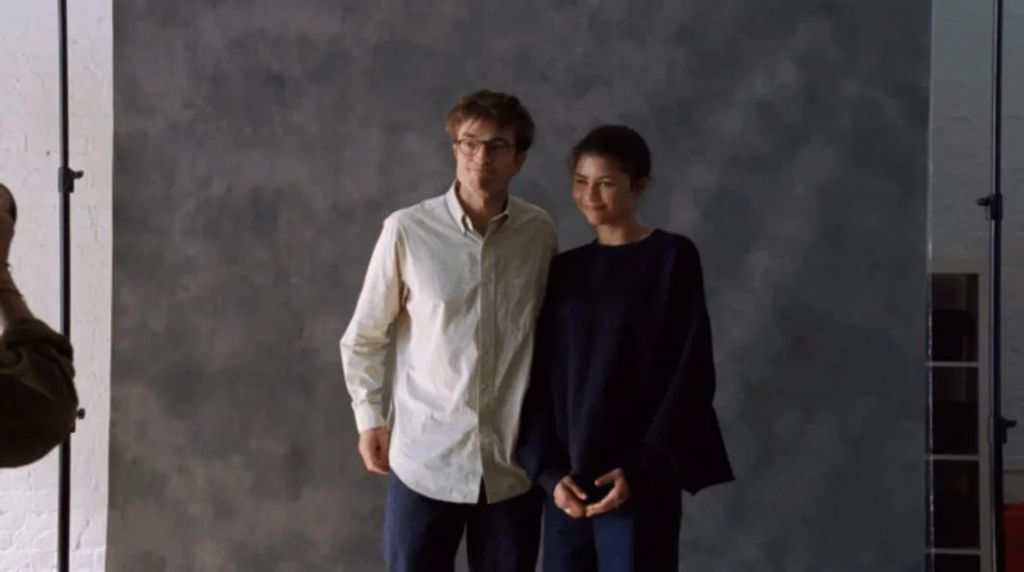
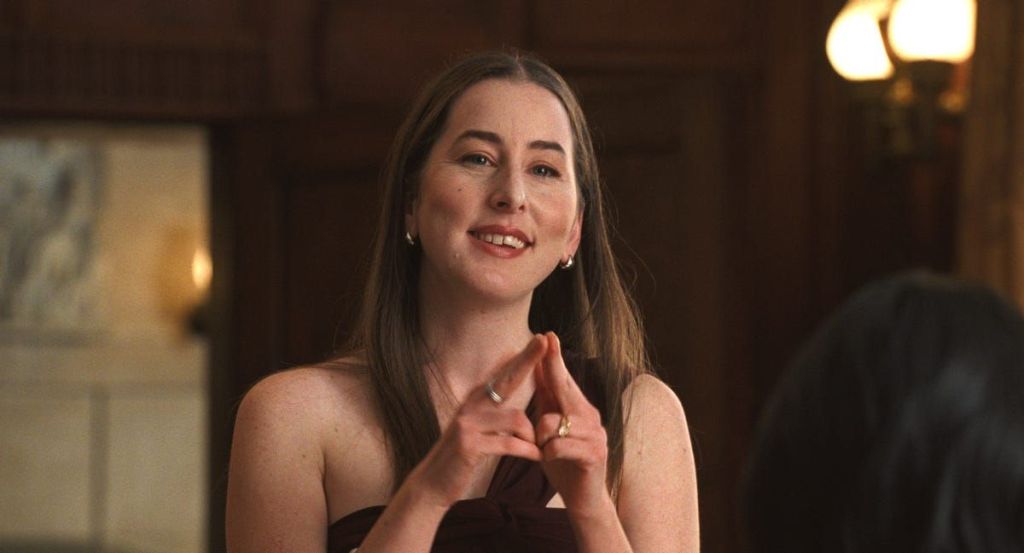
    The inciting incident of Kristoffer Borgli’s latest film The Drama is at a wine tasting double date the week before the wedding of Charlie (Robert Pattinson) and Emma (Zendaya); Charlie’s best friend, Mike (Mamoudou Athie) is pressured into sharing the worst thing he ever did by his wife, Rachel (Alana Haim), but only under the pretense everyone else also shared theirs. This was something Rachel and Mike did before they got married, and so the activity was seen as a fun icebreaker to “truly understand” every part of the person you’re marrying. Of course such a question combined with alchohol is always a recipe for chaos.

    Mike’s story is of having used an ex-girlfriend as a meat-shield against an aggressive dog biting them. It’s pretty bad but funny, Rachel attempts to back out of confessing hers but ultimately goes along with it. She admits that she had locked a “slow” kid in a closet in the middle of nowhere, and ran away, the kid not being found for an entire day.

    Charlie doesn’t know how to answer this question, he can’t think of anything bad that is sensantionalised to the degree of these previous stories; a human meat-shield, or punishment that went way too far, these are moments designed to be told in this context and be laughed off with some wine and forgotten about. Charlie just ends up telling them that he severely cyberbullied a child to the point his entire family had to move. Whether that’s true or not, which I absolutely believe was something made up on the spot to feel included and be morally on their level, it reveals a lot about Charlie as a character.

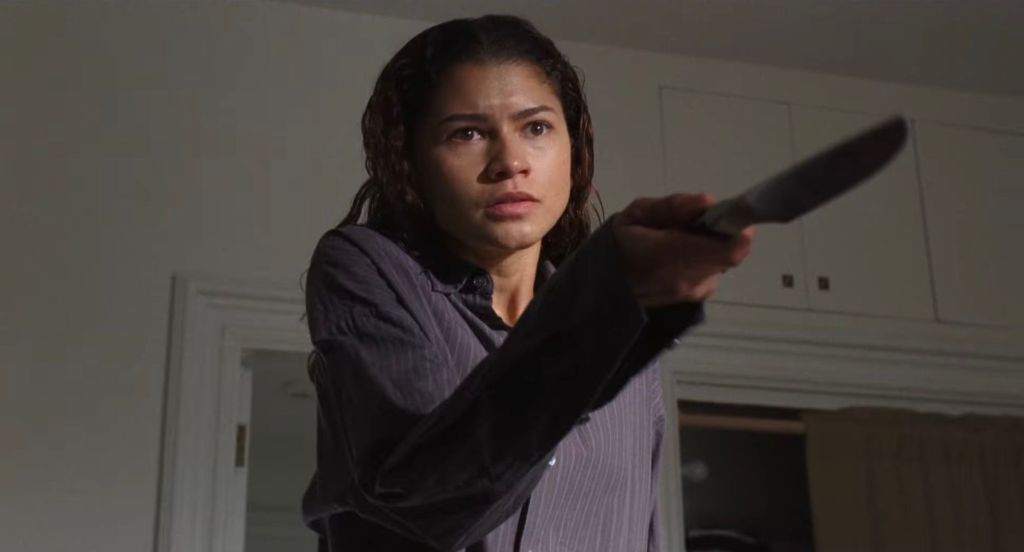
    Finally, it’s Emma’s time to tell hers – this brings us to the part of the trailer that was edited around to keep secret, and it leaves a lot to the imagination. You can see Emma’s nerves and hesitation to tell them the true worst thing she’s ever done. It says a lot about her character that she actually goes through with it. Emma almost went through with a mass shooting at her school as a 14 year old girl. Emma’s hesitation was very indicitative of her comfort with the people around her. The act of admitting their worst actions lulls her into a false sense of trust in the people around her, but admitting this instantly changes the mood of the table.

    At first they feel it’s a joke, or at least want to. Rachel instantly treats Emma as if she’s an irredeemable monster, Charlie tries to sugarcoat it or treat it like a layered joke. What ensues from Emma’s admission of her action, or almost action, really reveals the artificiality and hypocrisy in those around her.


    Charlie

    The Drama may base itself around Emma’s past, but it also feels like Charlie is the main character, because it is ultimately his spiral into madness upon hearing this information about his fiancee, someone he had a romanticised image of up until that point.

    The film starts with a very romcom meet-cute – Charlie spots Emma and is instantly attracted. He sees she’s reading a book, so when she’s away from her seat, he quickly checks what book she’s reading, in order to have something to talk about. However, due to being deaf in one ear, Charlie’s attempts at chatting her up are completely unnoticed, which is humiliating. However, he is given the chance to start again and approach her. Despite his approach being given 2 chances, he still goes to the first date without looking anything up about the book that caused for a very memorable meet-cute of the two, showing the shallowness in the relationship right from the start.

    Artificality – A perception of perfection..

    Centering the entire film on a wedding is the perfect way to exemplify a level of shallowness and artificiality in facing up to home truths and allowing for complex issues to be discussed with care. Charlie and Emma’s relationship on the surface seems very generic, we don’t ever get a sense of why they love each other, or why we should care for them as a couple. Charlie is trying to write his speech and it tells you nothing about Emma as a person, instead it’s just about her empathy, how kind she is, a dig at her laugh and then a reference to how good their sex is.

    The image of the wedding needs to be perfect and as their choreographer says, it’s a performance, and using this imagery as a contrast to the complete unravelling of Charlie’s sanity is a really great way of showing how superfluous Charlie and Emma’s relationship actually feels.

    Charlie can’t get out of his own head about Emma’s actions, desperately trying to find a deeper meaning to her intentions, yet refuses to have a proper conversation with Emma about it.

    Ultimately, his failure to communicate with her is what makes the spiral worse. Charlie’s perception of Emma is completely shifted — before the inciting incident there is a reason why the wedding and the relationship feels so artificial, it’s because there’s been no communication between the two delving into their true selves, and instead this performance of themselves; Charlie pretending to read a book to get Emma’s attention, but Emma actually opens up and tells Charlie something about her past, and it completely shatters this perfect image, and forces Charlie to see Emma as a complex human being.

    Emma only tells Charlie this after being lulled into a sense of trust and safety to do so, because her even contemplating shooting up a school is so unspeakably heinous and an ongoing issue in the public consciousness, that the admission of even thinking about doing that is too difficult to discuss and instead of opening up a discussion about it, it’s straight to dehumanising them or dismissing them. Obviously, that’s not to say her actions or thoughts can’t be objectively wrong, but a lack of thought and care in discussing them becomes too black-and-white, and feels as shallow as the relationship is in the first place.

    Emma is a human, and not a prop, and by finding out about her past and who she was, it forces Charlie to change the way he perceives her, which he just cannot get over no matter how hard he tries.

    In addition, while Zendaya’s role was reportedly colourblind, there is something really interesting in the social context of Charlie and Emma as a couple and in their actions. A black girl is not the perceived type of school shooter, and it’s that aspect of her that makes it feel unreal, and makes it so hard for Charlie to understand how it happened.

    Charlie is British, and gun violence is controlled in the UK, so our idea of gun violence is far more from the third person, especially compared to Rachel, that has a first-hand experience with the impact of gun violence – Charlie doesn’t know about the ways that guns were a persistent iconography in schools; how kids had to prepare for the possibility of it happening to them, and how guns had been used to create an aesthetic, a cool aesthetic that primarily acts as a rebellion, as a safety mechanism. Even to this day, nothing has changed, guns are seen as a human right. Charlie can’t possibly understand how a kid who was bullied heavily, felt completely lost and isolated, can get caught up in an ideology, a rebellion. It’s especially funny how this is contrasted with Rachel’s racial profiling of Mike, making up a fear of guns to make a bigger deal out of Emma’s actions.


    Rachel

    Despite Emma almost doing something truly heinous, the closest we get to a villain in The Drama is Alana Haim’s Rachel. A spiteful, hypocritical, artifical character. She spends the entire movie essentially torturing Emma over her mistake, threatening to pull the rug underneath her. But I find it so interesting from what position she’s coming from in doing so. Her reaction to Emma’s confession comes from a place of deep offence because she has a cousin in a wheelchair because of a shooting. That definitely gives her reason to be against gun violence on principle, but it definitely brings home this sense that Rachel is intentionally overreacting, and being offended on behalf of others who are directly impacted, with the level of intensity as if it was actually her. She has propped herself on a high horse and uses that information to present herself as on the right side of history.

    Even before Emma’s reveal, Rachel seems to only be friendly with Emma as a courtesy, it really comes off as if Rachel only saw Emma as a person she has to be friends with since she is the wife of Charlie’s best friend. Rachel even makes a snide comment about how she was surprised Emma even asked her to be maiden of honour, implying she felt like it made Emma seem like she had no one else. Rachel overall feels very obsessed with the image of things. Further exemplified by her story of Mike’s trauma with guns that don’t exist, and her decision to ghost Emma’s boss despite her committment to collaborating with her employer, based on how disturbed she was by what she heard. She is entirely concerned with how she looks and she, like many chronically online people, gets too intensely involved in other people’s drama. She feels the need to have an impact on it, she wants to let people know she doesn’t approve it.

    The funniest part is that Rachel’s own worst action is actually quite bad, and actually is something she went through with, but it’s laughed off..

    Taboos – Can I be in love with a psychopath?

    When tackling a subject such as mass shootings, it’s absolutely going to cause controversy and raise some eyebrows, and the choice to withhold the fact that the movie was about this doesn’t help. Arguably, I think that was the best choice for marketing this movie. It thrives on seeing you react to this information and process it in real time. It is ultimately a test of your morality and how your perception also changes for Emma. I think at its very core, the reaction to this film was very intentional, because it’s taboo, which is what incites this spiral and visceral reaction.

    I mentioned it earlier, but culturally, school shootings happen so often, but it feels like it’s a topic you can’t talk about in a way that potentially humanises the person behind that act. And I am absolutely not justifying their actions, but my point is, Emma is a human. She is a normal girl by all means before this, and as she says as well, there are so many people out there that have almost done the same thing, and live with the knowledge, and nobody knows.

    When you compare the actions of the characters in this film alone, you have Charlie’s struggle to find a truly bad thing he has done, and chooses to potentially make up bullying someone so intensely that it makes their family move away; joke or not, that is laughed off as kids being kids, but that action if true is very bad. Rachel’s is even worse, and is also laughed off, and not even properly judged. The implication is that as an adult she just locked a mentally disabled child for little other reason than he was being a bit annoying, and his screams for help scared her away. There had to be a search party to find him, because she never told anyone, and she lives with this, not knowing the consequences of her actions, and also treating it like it’s just a funny story – she was an adult and she traumatised a child, who knows what could’ve happened, she doesn’t feel bad about it really.

    Does that make her a sociopath? Irredeemable? Evil? To be honest, no. It’s pretty bad, but the only reason I highlight this is, Emma didn’t actually go through with her plan, she is permanently deaf in one ear as a consequence, and she took quite the turn to becoming a full on gun violence activist in the aftermath of a seperate mass shooting. Emma has had a lot of time to understand the weight of her situation and work on herself, which is why she is not that person now. She is at peace with herself, and doesn’t ever sugarcoat her action. But there is no growth with Rachel, she thinks her actual action where she traumatised a child makes her morally superior.I

    I feel this entire point comes off as if I’m saying Rachel’s action is worse than a mass shooting, but I’m not. It’s less about the action itself, and more the personal growth, the perception of the situation, the consequences. Generally, Rachel’s actions aren’t going to cause a drama quite on the level of Emma’s, but the mention of comparing the two is seen as unspeakable, proven by the response to this movie.

    Those affected directly by gun violence absolutely have the right to be unhappy with misleading marketing bringing up trauma. My point relies mainly on Rachel that exerts her cousin’s trauma onto herself to make her feel morally superior.

    Another question at the core of this movie is if Emma is a psychopath and if she should be trusted. There is this constant threat of calling the police as a response to the information, as if an action that didn’t even happen over a decade ago is grounds for arrest, as if Emma shows signs of choosing to do something like that again. Charlie doesn’t want to be in love with a psychopath or someone he views not as a human. A school shooter is never treated as a human and more as a great evil. These people are deeply disturbed and absolutely deserve punishment for their actions, but you have to consider what leads them to do something like that. By stripping back their humanity, it is exactly how they were brought to that heinous action, often feeling outcast and needing to make an impact. So many of these shooters will also kill themselves, it really isn’t constructive to ignore the reasons why someone would do this.

    We see some of Emma’s past in flashbacks, and that version of Emma is all Charlie ends up seeing as he tries to make things normal again. He wants her past self to have had an inciting incident so ridiculously traumatic that the response is equally big; the truth is, it is relatively small reasons but they amount to a lot at that age and within that cultural zeitgeist.


    Emma

    Emma is an interesting character because we do see her past, the film is about her actions, but it feels like we don’t get as much of her reaction to the situation. We don’t really see too much of how she actually is as a person in the present day. We basically watch from Charlie’s perspective, unsure if the film will reveal that she has actually hidden a killer streak still ongoing. Charlie’s speech calls Emma empathetic and kind, in the generic sense before he finds out about her past, and removes it once he does, but over the course of the film, it really feels like Emma actually is kind and empathetic.  Before this wine tasting dinner, Charlie and Emma see their DJ using heroin, and it’s interesting how instantly understanding and forgiving Emma is in comparison to Charlie. Emma knows firsthand the complexities of morality and your actions and doesn’t really want to fire her. Charlie is aimless, and seems to only want to go by the social norm, following advice from his friends, he doesn’t seem to have an opinion it beyond that.

    Even from the start, Emma is shown to value second chances, giving Charlie many, even later into the film..

    Second Chances – Can we press the reset button?

    Fundamentally, The Drama is a film about second chances and the importance of that in a relationship. In the end, Charlie is given a second chance for making a complete disaster of the wedding and cheating on Emma.

    In pursuit of understanding, Charlie turns to his colleague, Misha (Hailey Benton Gates) for emotional support and advice on what he should do in his unique situation. Charlie, in a moment of weakness, starts making out with Misha and ripping her clothes off. He can’t go through with going any further, but the sabotage of his relationship in that moment feels like a subconscious rebellion, he is doing the worst thing he can think of, maybe as a way to balance the scales in his mind.

    As a result of Rachel’s appearence at the wedding, appearing to tell guests about Emma’s secret, Misha’s mention of Charlie’s hypothetical makes Emma grab her to clear things up, but Misha thinks it’s about their kiss, and all hell breaks loose from there. That central wedding is a bigger disaster than what seems conceivable, as a physical representation of the crumbling relationship that needs a reset, needs mutual understanding and communication.

    Even through all of that, and even Charlie’s very public embarassment, Emma still accepts him and forgives him. He allows Charlie the option to reset and start over. I like to think it comes from her understanding of how the wedding ended up the way it did as a consequence of her own actions. She is able to own up to them and change, something nobody else in this movie does about their worst thing.

    Even as a kid right after she was about to commit the most heinous crime, she was able to cry with her bully and see her bully as a human. She found her people advocating against the extremes she almost went to and she went from saying she’d kill her bully first to accepting her.


    The Drama is a film I really enjoyed and would like to rewatch. It had me really thinking, and I love when a film does that to me. There are just so many layers to it, and Borgli handles it really well. I found it funny at moments, stressful at others but kind of cathartic too. It’s a lot of very important conversations that need to be had.

    But do you think Emma deserves a second chance, or is she defined by one moment, condemned for life? Let me know.