Tag: Films

  • ‘The Drama’ – Artificiality, Taboos, and Second Chances

    ‘The Drama’ – Artificiality, Taboos, and Second Chances

    For reference, this blog will go in detail about The Drama, and delve into spoilers. Its core premise is in of itself a spoiler. So maybe take a read once you’ve seen it, or if you don’t particularly care for spoilers.

    What’s the worst thing you’ve ever done?

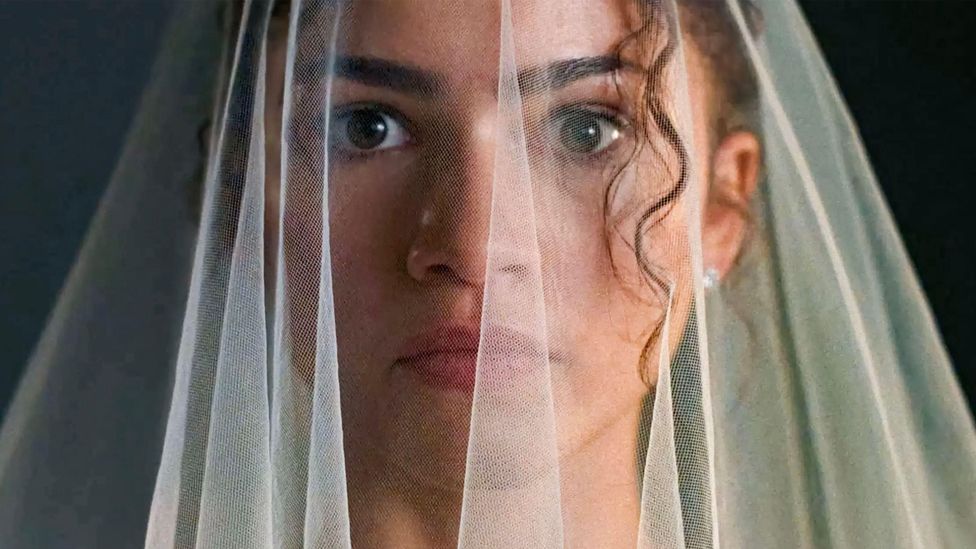
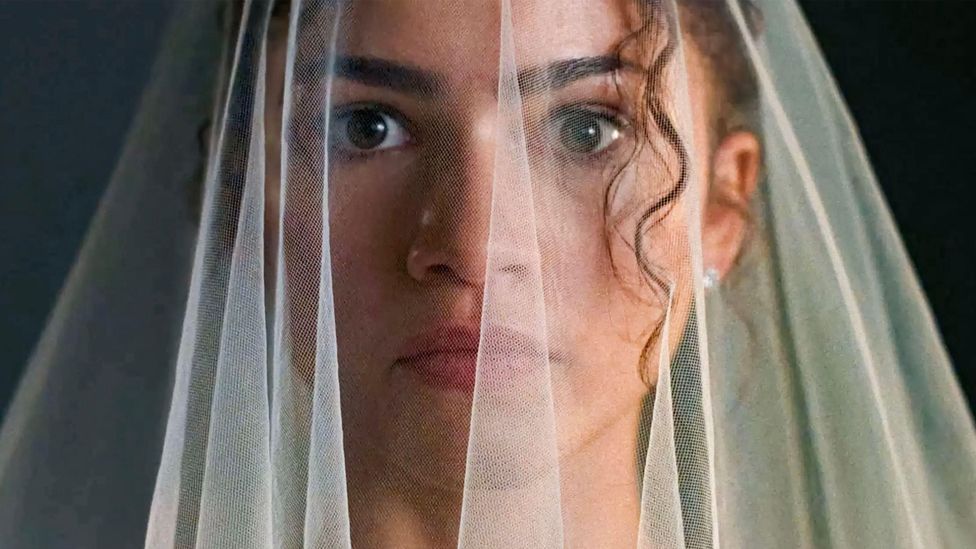
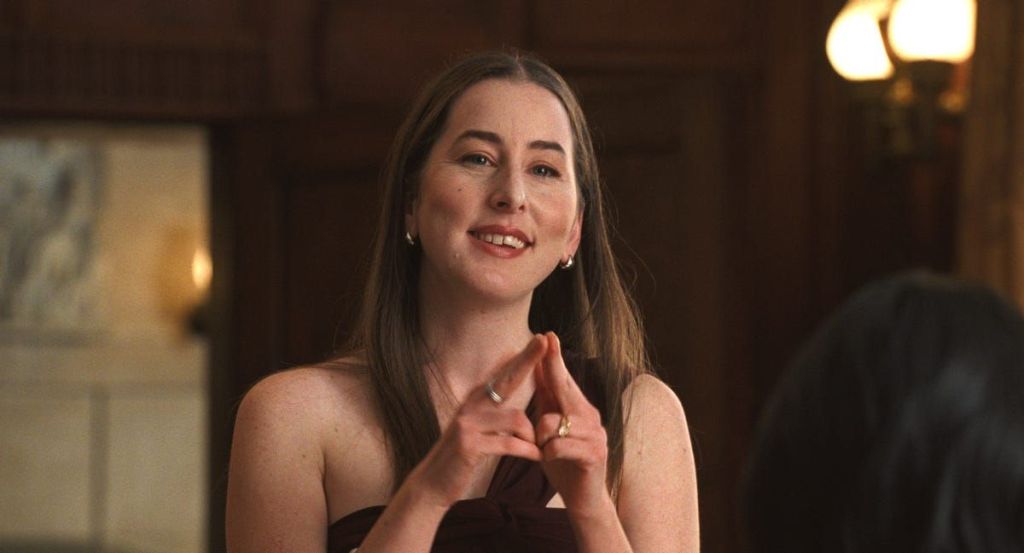
    The inciting incident of Kristoffer Borgli’s latest film The Drama is at a wine tasting double date the week before the wedding of Charlie (Robert Pattinson) and Emma (Zendaya); Charlie’s best friend, Mike (Mamoudou Athie) is pressured into sharing the worst thing he ever did by his wife, Rachel (Alana Haim), but only under the pretense everyone else also shared theirs. This was something Rachel and Mike did before they got married, and so the activity was seen as a fun icebreaker to “truly understand” every part of the person you’re marrying. Of course such a question combined with alchohol is always a recipe for chaos.

    Mike’s story is of having used an ex-girlfriend as a meat-shield against an aggressive dog biting them. It’s pretty bad but funny, Rachel attempts to back out of confessing hers but ultimately goes along with it. She admits that she had locked a “slow” kid in a closet in the middle of nowhere, and ran away, the kid not being found for an entire day.

    Charlie doesn’t know how to answer this question, he can’t think of anything bad that is sensantionalised to the degree of these previous stories; a human meat-shield, or punishment that went way too far, these are moments designed to be told in this context and be laughed off with some wine and forgotten about. Charlie just ends up telling them that he severely cyberbullied a child to the point his entire family had to move. Whether that’s true or not, which I absolutely believe was something made up on the spot to feel included and be morally on their level, it reveals a lot about Charlie as a character.

    Finally, it’s Emma’s time to tell hers – this brings us to the part of the trailer that was edited around to keep secret, and it leaves a lot to the imagination. You can see Emma’s nerves and hesitation to tell them the true worst thing she’s ever done. It says a lot about her character that she actually goes through with it. Emma almost went through with a mass shooting at her school as a 14 year old girl. Emma’s hesitation was very indicitative of her comfort with the people around her. The act of admitting their worst actions lulls her into a false sense of trust in the people around her, but admitting this instantly changes the mood of the table.

    At first they feel it’s a joke, or at least want to. Rachel instantly treats Emma as if she’s an irredeemable monster, Charlie tries to sugarcoat it or treat it like a layered joke. What ensues from Emma’s admission of her action, or almost action, really reveals the artificiality and hypocrisy in those around her.


    Charlie

    The Drama may base itself around Emma’s past, but it also feels like Charlie is the main character, because it is ultimately his spiral into madness upon hearing this information about his fiancee, someone he had a romanticised image of up until that point.

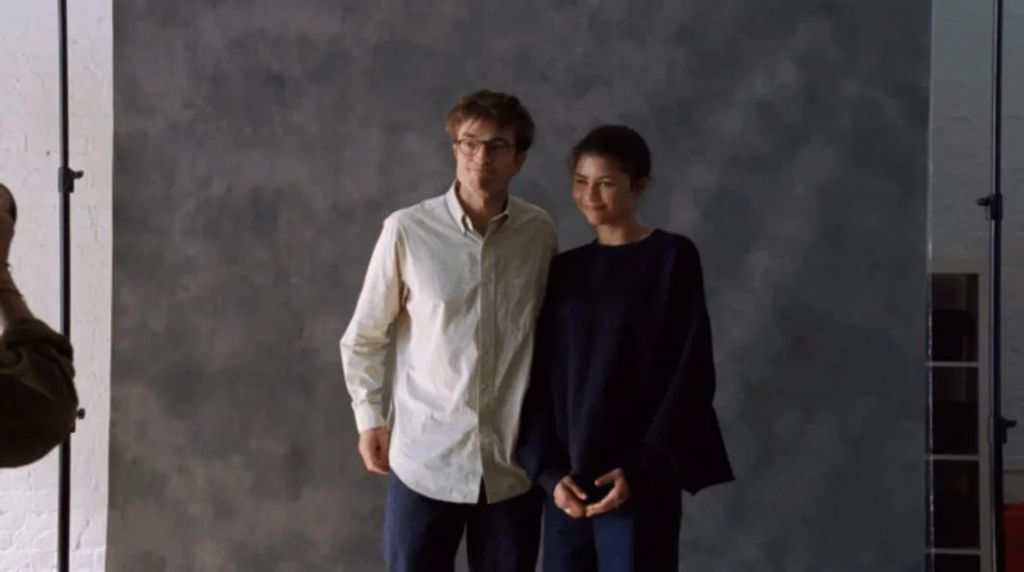
    The film starts with a very romcom meet-cute – Charlie spots Emma and is instantly attracted. He sees she’s reading a book, so when she’s away from her seat, he quickly checks what book she’s reading, in order to have something to talk about. However, due to being deaf in one ear, Charlie’s attempts at chatting her up are completely unnoticed, which is humiliating. However, he is given the chance to start again and approach her. Despite his approach being given 2 chances, he still goes to the first date without looking anything up about the book that caused for a very memorable meet-cute of the two, showing the shallowness in the relationship right from the start.
    Artificality – A perception of perfection..

    Centering the entire film on a wedding is the perfect way to exemplify a level of shallowness and artificiality in facing up to home truths and allowing for complex issues to be discussed with care. Charlie and Emma’s relationship on the surface seems very generic, we don’t ever get a sense of why they love each other, or why we should care for them as a couple. Charlie is trying to write his speech and it tells you nothing about Emma as a person, instead it’s just about her empathy, how kind she is, a dig at her laugh and then a reference to how good their sex is.

    The image of the wedding needs to be perfect and as their choreographer says, it’s a performance, and using this imagery as a contrast to the complete unravelling of Charlie’s sanity is a really great way of showing how superfluous Charlie and Emma’s relationship actually feels.

    Charlie can’t get out of his own head about Emma’s actions, desperately trying to find a deeper meaning to her intentions, yet refuses to have a proper conversation with Emma about it.

    Ultimately, his failure to communicate with her is what makes the spiral worse. Charlie’s perception of Emma is completely shifted — before the inciting incident there is a reason why the wedding and the relationship feels so artificial, it’s because there’s been no communication between the two delving into their true selves, and instead this performance of themselves; Charlie pretending to read a book to get Emma’s attention, but Emma actually opens up and tells Charlie something about her past, and it completely shatters this perfect image, and forces Charlie to see Emma as a complex human being.

    Emma only tells Charlie this after being lulled into a sense of trust and safety to do so, because her even contemplating shooting up a school is so unspeakably heinous and an ongoing issue in the public consciousness, that the admission of even thinking about doing that is too difficult to discuss and instead of opening up a discussion about it, it’s straight to dehumanising them or dismissing them. Obviously, that’s not to say her actions or thoughts can’t be objectively wrong, but a lack of thought and care in discussing them becomes too black-and-white, and feels as shallow as the relationship is in the first place.

    Emma is a human, and not a prop, and by finding out about her past and who she was, it forces Charlie to change the way he perceives her, which he just cannot get over no matter how hard he tries.

    In addition, while Zendaya’s role was reportedly colourblind, there is something really interesting in the social context of Charlie and Emma as a couple and in their actions. A black girl is not the perceived type of school shooter, and it’s that aspect of her that makes it feel unreal, and makes it so hard for Charlie to understand how it happened.

    Charlie is British, and gun violence is controlled in the UK, so our idea of gun violence is far more from the third person, especially compared to Rachel, that has a first-hand experience with the impact of gun violence – Charlie doesn’t know about the ways that guns were a persistent iconography in schools; how kids had to prepare for the possibility of it happening to them, and how guns had been used to create an aesthetic, a cool aesthetic that primarily acts as a rebellion, as a safety mechanism. Even to this day, nothing has changed, guns are seen as a human right. Charlie can’t possibly understand how a kid who was bullied heavily, felt completely lost and isolated, can get caught up in an ideology, a rebellion. It’s especially funny how this is contrasted with Rachel’s racial profiling of Mike, making up a fear of guns to make a bigger deal out of Emma’s actions.


    Rachel

    Despite Emma almost doing something truly heinous, the closest we get to a villain in The Drama is Alana Haim’s Rachel. A spiteful, hypocritical, artifical character. She spends the entire movie essentially torturing Emma over her mistake, threatening to pull the rug underneath her. But I find it so interesting from what position she’s coming from in doing so. Her reaction to Emma’s confession comes from a place of deep offence because she has a cousin in a wheelchair because of a shooting. That definitely gives her reason to be against gun violence on principle, but it definitely brings home this sense that Rachel is intentionally overreacting, and being offended on behalf of others who are directly impacted, with the level of intensity as if it was actually her. She has propped herself on a high horse and uses that information to present herself as on the right side of history.

    Even before Emma’s reveal, Rachel seems to only be friendly with Emma as a courtesy, it really comes off as if Rachel only saw Emma as a person she has to be friends with since she is the wife of Charlie’s best friend. Rachel even makes a snide comment about how she was surprised Emma even asked her to be maiden of honour, implying she felt like it made Emma seem like she had no one else. Rachel overall feels very obsessed with the image of things. Further exemplified by her story of Mike’s trauma with guns that don’t exist, and her decision to ghost Emma’s boss despite her committment to collaborating with her employer, based on how disturbed she was by what she heard. She is entirely concerned with how she looks and she, like many chronically online people, gets too intensely involved in other people’s drama. She feels the need to have an impact on it, she wants to let people know she doesn’t approve it.

    The funniest part is that Rachel’s own worst action is actually quite bad, and actually is something she went through with, but it’s laughed off..
    Taboos – Can I be in love with a psychopath?

    When tackling a subject such as mass shootings, it’s absolutely going to cause controversy and raise some eyebrows, and the choice to withhold the fact that the movie was about this doesn’t help. Arguably, I think that was the best choice for marketing this movie. It thrives on seeing you react to this information and process it in real time. It is ultimately a test of your morality and how your perception also changes for Emma. I think at its very core, the reaction to this film was very intentional, because it’s taboo, which is what incites this spiral and visceral reaction.

    I mentioned it earlier, but culturally, school shootings happen so often, but it feels like it’s a topic you can’t talk about in a way that potentially humanises the person behind that act. And I am absolutely not justifying their actions, but my point is, Emma is a human. She is a normal girl by all means before this, and as she says as well, there are so many people out there that have almost done the same thing, and live with the knowledge, and nobody knows.

    When you compare the actions of the characters in this film alone, you have Charlie’s struggle to find a truly bad thing he has done, and chooses to potentially make up bullying someone so intensely that it makes their family move away; joke or not, that is laughed off as kids being kids, but that action if true is very bad. Rachel’s is even worse, and is also laughed off, and not even properly judged. The implication is that as an adult she just locked a mentally disabled child for little other reason than he was being a bit annoying, and his screams for help scared her away. There had to be a search party to find him, because she never told anyone, and she lives with this, not knowing the consequences of her actions, and also treating it like it’s just a funny story – she was an adult and she traumatised a child, who knows what could’ve happened, she doesn’t feel bad about it really.

    Does that make her a sociopath? Irredeemable? Evil? To be honest, no. It’s pretty bad, but the only reason I highlight this is, Emma didn’t actually go through with her plan, she is permanently deaf in one ear as a consequence, and she took quite the turn to becoming a full on gun violence activist in the aftermath of a seperate mass shooting. Emma has had a lot of time to understand the weight of her situation and work on herself, which is why she is not that person now. She is at peace with herself, and doesn’t ever sugarcoat her action. But there is no growth with Rachel, she thinks her actual action where she traumatised a child makes her morally superior.I

    I feel this entire point comes off as if I’m saying Rachel’s action is worse than a mass shooting, but I’m not. It’s less about the action itself, and more the personal growth, the perception of the situation, the consequences. Generally, Rachel’s actions aren’t going to cause a drama quite on the level of Emma’s, but the mention of comparing the two is seen as unspeakable, proven by the response to this movie.

    Those affected directly by gun violence absolutely have the right to be unhappy with misleading marketing bringing up trauma. My point relies mainly on Rachel that exerts her cousin’s trauma onto herself to make her feel morally superior.

    Another question at the core of this movie is if Emma is a psychopath and if she should be trusted. There is this constant threat of calling the police as a response to the information, as if an action that didn’t even happen over a decade ago is grounds for arrest, as if Emma shows signs of choosing to do something like that again. Charlie doesn’t want to be in love with a psychopath or someone he views not as a human. A school shooter is never treated as a human and more as a great evil. These people are deeply disturbed and absolutely deserve punishment for their actions, but you have to consider what leads them to do something like that. By stripping back their humanity, it is exactly how they were brought to that heinous action, often feeling outcast and needing to make an impact. So many of these shooters will also kill themselves, it really isn’t constructive to ignore the reasons why someone would do this.

    We see some of Emma’s past in flashbacks, and that version of Emma is all Charlie ends up seeing as he tries to make things normal again. He wants her past self to have had an inciting incident so ridiculously traumatic that the response is equally big; the truth is, it is relatively small reasons but they amount to a lot at that age and within that cultural zeitgeist.


    Emma

    Emma is an interesting character because we do see her past, the film is about her actions, but it feels like we don’t get as much of her reaction to the situation. We don’t really see too much of how she actually is as a person in the present day. We basically watch from Charlie’s perspective, unsure if the film will reveal that she has actually hidden a killer streak still ongoing. Charlie’s speech calls Emma empathetic and kind, in the generic sense before he finds out about her past, and removes it once he does, but over the course of the film, it really feels like Emma actually is kind and empathetic.  Before this wine tasting dinner, Charlie and Emma see their DJ using heroin, and it’s interesting how instantly understanding and forgiving Emma is in comparison to Charlie. Emma knows firsthand the complexities of morality and your actions and doesn’t really want to fire her. Charlie is aimless, and seems to only want to go by the social norm, following advice from his friends, he doesn’t seem to have an opinion it beyond that.

    Even from the start, Emma is shown to value second chances, giving Charlie many, even later into the film..

    Second Chances – Can we press the reset button?
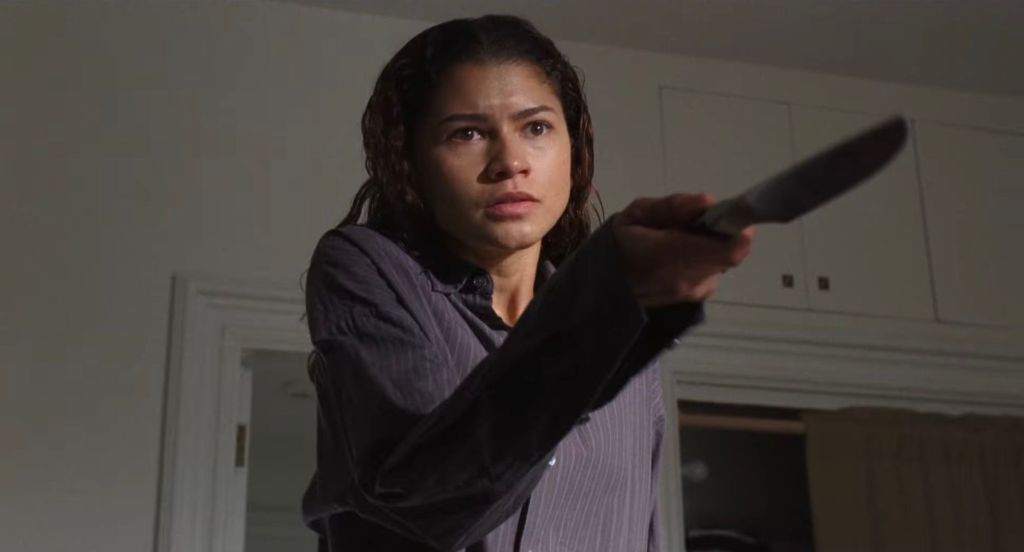
    Fundamentally, The Drama is a film about second chances and the importance of that in a relationship. In the end, Charlie is given a second chance for making a complete disaster of the wedding and cheating on Emma.

    In pursuit of understanding, Charlie turns to his colleague, Misha (Hailey Benton Gates) for emotional support and advice on what he should do in his unique situation. Charlie, in a moment of weakness, starts making out with Misha and ripping her clothes off. He can’t go through with going any further, but the sabotage of his relationship in that moment feels like a subconscious rebellion, he is doing the worst thing he can think of, maybe as a way to balance the scales in his mind.

    As a result of Rachel’s appearence at the wedding, appearing to tell guests about Emma’s secret, Misha’s mention of Charlie’s hypothetical makes Emma grab her to clear things up, but Misha thinks it’s about their kiss, and all hell breaks loose from there. That central wedding is a bigger disaster than what seems conceivable, as a physical representation of the crumbling relationship that needs a reset, needs mutual understanding and communication.

    Even through all of that, and even Charlie’s very public embarassment, Emma still accepts him and forgives him. He allows Charlie the option to reset and start over. I like to think it comes from her understanding of how the wedding ended up the way it did as a consequence of her own actions. She is able to own up to them and change, something nobody else in this movie does about their worst thing.

    Even as a kid right after she was about to commit the most heinous crime, she was able to cry with her bully and see her bully as a human. She found her people advocating against the extremes she almost went to and she went from saying she’d kill her bully first to accepting her.


    The Drama is a film I really enjoyed and would like to rewatch. It had me really thinking, and I love when a film does that to me. There are just so many layers to it, and Borgli handles it really well. I found it funny at moments, stressful at others but kind of cathartic too. It’s a lot of very important conversations that need to be had.

    But do you think Emma deserves a second chance, or is she defined by one moment, condemned for life? Let me know.
  • Is There An “Anti-Fun Epidemic” in Film Criticism?

    Is There An “Anti-Fun Epidemic” in Film Criticism?

    Hello, and welcome back to my blog. Sorry for the extended break, I have been quite busy and preoccupied with other things, but I want to make an effort to get more posts out.

    Today, I wanted to talk about a made-up phrase I came up with earlier this morning – the idea of an “Anti-Fun Epidemic”. What does that mean though, and why did this come up? Well, if you don’t know, The Super Mario Galaxy Movie comes out next week, and Nintendo are premiering it in Tokyo. I am a huge Nintendo fan and general video game fan, and most my online circles lean towards video games. So, the reception of The Super Mario Bros. Movie, and its mixed, leaning negative outlook is a bitter point as they enjoyed it, and are very excited about this new one. One went as far as to essentially discredit film critics for losing their sense of fun, and generally being miserable because of the way they criticised that original movie.

    Now, obviously that’s just an opinion. And I’d not be honest if I didn’t admit my many clashes with critics’ opinions of certain movies. They can absolutely sometimes be pre-conceived in their views on certain films.

    Why do I want to talk about this, though? It’s a non-issue.. who cares if my friend doesn’t trust film critics? Well that’s a good question. The short answer is that this is very insignificant, but in the long answer basically this is part of a larger ongoing discussion I’ve seen brewing since 2020 primarily.

    The original Super Mario Bros. Movie is a bit of a mess. Very overstuffed, barely coherent, and goes at an insane breakneck pace, not allowing anything to breathe. But I enjoyed it anyway, as I love Mario and that’s fine. However, film critics pointed these things out and criticised the overall film on those points. Should a film critic be invalidated for pointing this out, and actually doing their job? Overall, the “fun police” angle feels very flawed. Ultimately, it’s an uphill battle for these fans who want to act like the credibility of film criticism has gone down as a result of criticising a film on its own merits.

    Getting to my actual point, I feel this anti-criticism mentality for films that exist only to be “fun” and quality is allowed to be as low as humanly possible purely because of that fun, and how it played into your personal investment of a character or game or anything that’s being adapted, is a standards issue. It sounds condescending, but the standards for a good adaptation, especially in video game movies, are very low. The pure fanservice and love of the game it’s based on is seen as enough. But A Minecraft Movie sucks. That film isn’t even that fun to me. But it could’ve been. People had felt a Minecraft movie in live action was impossible to pull off.. but nothing is impossible to pull off. The production of the Minecraft movie went under too many creatives, and one included a Rob Mac script that probably was on a similar wavelength to what I was imagining. Minecraft can get philisophical and it’s inherently quite eerie conceptually. At the dawn of Minecraft, I feel as though its meloncholy, its post-apocalyptic vibe and its almost-horror elements were more prominent. Why can’t that aspect be adapted into an interesting, creative script and be made with love and respect for the source material? This side tangent is to prove that it CAN be good, and so the bad reviews of the one we have right now is not about whether it was a good adaptation of Minecraft or if it serviced fans enough, it’s about the final product based on the merits of the movie itself. Instead of allowing these types of adaptations that exist only to be good fanservice, it’s this fight back to act as if there can’t be a better version.

    The case study, so to speak, being Mario movies is a little different. I don’t think these are bad movies, but they are so stuffed and it is so clear that Miyamoto has so many ideas and requests of what should be in the movies, and he infamously does not care about story, it results in a very packed film. Unlike the Minecraft point, I don’t know if Mario exactly needs to have a better movie, these movies really feel like good celebrations of the series, but criticism of those movies are valid and come from a place of criticising them as actual films.

    The reason I ranted so much about this, and mainly about Mario and Minecraft, is because it always seems to spawn from these adaptations of video games, Sonic has this issue too, although it has seemingly beatem the curve with its third film.

    It feels like every single fandom will rally against “film reviewers” when a film drops, has mixed reviews and is based on a widely beloved franchise. It paints this picture of an “Anti-Fun Epidemic”, one that almost certainly doesn’t exist. The ultimate counterpoint is The LEGO Movie, a genuinely amazing film that was critically acclaimed. An incredibly smart adaptation that holds its own, and even more recently Barbie snuck its way into Best Picture at the Oscars as another toy adaptation. These are movies that take beloved franchises successfully and pleased fans and critics. That’s the kind of balance you need to have and you want to have, and with a successful creative team you can. Because this is a creative industry, and you can very easily tell when a film is made out of love and passion, and when a film is made for money.

    Ultimately, my point is that a film can be good and fun, and many flawed films seem to get shielded for that feature alone, forgetting that “fun” can’t be the only thing a film needs to be, since most are by default.

  • How We Deal With the End of the World – ‘Bugonia’ & ‘A House of Dynamite’

    How We Deal With the End of the World – ‘Bugonia’ & ‘A House of Dynamite’

    11th November 2025

    It’s been a couple weeks since my last post, mainly because I’ve been quite busy with other things, but also because of the few major films I’ve seen since the last review I’ve either had little to say — or in the case of a couple films I’m going to be talking about today, I feel they compliment each other quite well in what I would want to discuss about them.

    The two films are Bugonia, directed by Yorgos Lanthimos, and A House of Dynamite directed by Kathryn Bigelow. On the surface, these films feel very different from each other to two very extremes; Lanthimos’ films being known for their weird, unsettling, absurd films with heart, Bigelow known more for films with a more serious representation of war. Arguably, the first time Lanthimos and Bigelow films can intercept in the way they have for me here, because Bugonia left me with some weirdly complicated feelings on the ways it serves its characters, how their beliefs and flaws are almost undermined by the direction of the story, but how the overwhelming pessimism really works and leaves you impacted. I overall really liked Bugonia, but I equally felt a little baffled by what the film was really trying to tell me, when it felt the need to completely undermine what I had felt was the message at the time. However, it has been a couple weeks, and I have since also watched A House of Dynamite on Netflix, and while my feelings are largely negative on it, I found that reflecting on it makes me understand Bugonia more in a weird unintentional way. These two films are both essentially about the powerlessness of humanity, and that is something both very beautiful and terrifying. It’s why I wanted to write about both in one big post here because I found the parallels so fascinating.

    It’s 2025, halfway through the 2020s; the cursed decade. We are about to experience the onslaught of films based on the first half of this decade, but you already know what happened if you’re reading this now. To start the decade, we had both a global pandemic and the fear of nuclear war, and while the latter did calm down quickly after, it’s still a threat that pops its head out time to time. Global relations are the most publicly rocky they have been for a while, Russia invading Ukraine, the 100 year long ethnic cleansing of Palestine by Israel, the 2024 US election putting you-know-who back into power. I could go on, but you probably already know all this, so what’s my point? Well, I’m setting the scene here for perhaps the most overtly pessimistic decade where we are completely aware of how bad things are without just burying our heads in the sand like we used to. Obviously, people are still doing that as they always will, but it feels like we’re increasingly more aware. While we are in the rise of censorship, and stripping back of diversity to “fight back” against “the woke mind virus”, the filmmakers of any generation will always form their art around the truth.

    For better or for worse, Bugonia and A House of Dynamite both feel like products of the past five years. They both ask the question: Are we ready for the end of the world?

    Are We All Insane?

    From the very start of Bugonia, it becomes very obvious what the core metaphor of this film is. Through Robbie Ryan’s stunning cinematography, the day in a life of a worker bee is portrayed, paired with a voiced-over conversation between the two central characters Teddy and Don; Teddy explaining the process the bees go through. Teddy is a beekeeper, but he is also a low level employee for Auxolith Corporation, a pesticide manufacturing company. Teddy then mentions how bee colonies are increasingly suffering from Colony Collapse Disorder, which is when a colony of bees leave their colony, abandoning their food source and their queen. He believes Auxolith’s pesticide is causing this to happen, and the reason for this is because the CEO of Auxolith, Michelle Fuller, is actually an alien that wants to kill all humans, and by getting rid of bees, it can accelerate the process. Though the usage of bee imagery is certainly for the CCD parallel, I think foundationally it draws parallels with Michelle Fuller as a queen bee while Teddy is a worker bee that’s abandoning his colony so to speak.

    Anyway, Teddy, played excellently by Jesse Plemons, is portrayed as mentally unstable from the start. He seems very isolated, and distrusting. Despite that, his best friend and cousin Don is by his side. Don seems quite impressionable as he’s implied to be autistic I believe, and Teddy cares deeply for him, but equally he wants to fill Don’s mind with his own beliefs. Teddy’s fixation on his conspiracy theories of Auxolith’s CEO being an alien is depicted as insanity, and as we unpack more about his history, we find out about how Auxolith’s pesticides caused his mother to enter a permanent coma. So much of the situation is tragic, and then we later find out that Teddy was sexually assaulted by his babysitter, that is also a cop, when he was younger. These two major traumatic events helps you to see Teddy in a different light, he is undoubtedly insane and quite psychopathic, but its rooted in some raw, unresolved trauma, and he’s taken it out on society as a whole.

    Our first introduction to Michelle Fuller is honestly fascinating. The ominous, unsettling score from Jerskin Fendrix plays over the morning routine of Michelle, and it is all we can hear. We see her from behind windows, from the outside of her car, and are fully detached from her entirely. It’s such a fascinating way to introduce her, but it ultimately dehumanises her in a way that Teddy does. He sees her, but is incapable of actually knowing her from anywhere but afar. There is a glass wall between “them” and “us”. Emma Stone is phenomenal as Michelle Fuller, as she really conveys this inhumane CEO, that only uses corporate language, and has absolutely no care in the world for other human beings unless it impacts her business. Yorgos’ framing of Teddy and Michelle for their first appearances paints two pictures; the one that Yorgos wants us to believe, and the one that is the final twist. What he wants us to believe is what I said above, about Teddy’s mental psychosis, how Teddy dehumanises Michelle but doesn’t actually know her. The truth is that it ultimately puts a glass wall between the audience and Michelle as we aren’t allowed to grow attached to her as a person and only see her as a cold corporate figurehead, and with the sinister music and constant distance, the film is actively dehumanising her and telling us she is deceiving us.

    Yorgos is playing with us and consistently changing how we perceive the truth. At first, the true outcome felt it undermined the point of the film, and arguably I still feel it might, but I think with time I’ve seen how the uncertainty of the truth and the powerlessness we as a species have over our planet can cause anyone to spiral. Teddy has been indoctrinated by the internet, he’s obsessive over going deeper down a rabbit hole, and his cousin Don gets caught in the spiral. Ultimately, the two of them take different meanings from it; Teddy’s determination to heal his mother and get revenge contrasting Don’s disdain for life as it is, his feeling of complete isolation from anyone. The result is Teddy becoming a serial killer, and Don sadly choosing to no longer be alive. It’s a very dangerous spiral and it happens in real life, but the rug-pull of Bugonia is that Teddy was actually right. My gripe with this is that does making Teddy actually right glorify this kind of behaviour. It’s a matter of perspective though, because ultimately the final moments of this film spiral into complete insanity leading to the full extinction of humanity, so effortlessly done by Michelle’s alien queen form. What Yorgos presents is a reality check, Teddy may have been right, but he poked the wasp’s nest (Well, that’s kinda fitting..), and in turn doomed humanity. Michelle didn’t even have the intention to kill humanity, instead wanting to keep it alive, but that goodwill was destroyed, and we as a species must suffer the consequences. All of humanity just stops on what seemed to be a normal day, and it’s extremely unsettling and extremely pessimistic.

    I felt maybe Yorgos was undermining the message of the dangers of the indoctrination of impressionable minds, but Teddy is condemned possibly in the most devastating way possible. Instead, I like to think Bugonia is showing us that we’re ultimately just bugs, and we can be squished so easily. Our hubris, our sense of power, it’s all completely pointless because it can be undone with one well-timed stomp of the shoe.

    Powerlessness in the Face of Our Demise

    I have less favourable thoughts on A House of Dynamite. Beyond a decent opening 40 minutes, Bigelow’s choice is to completely change the cast twice after. A House of Dynamite is a film about how the USA would deal with nuclear war, from the perspective of the workers and politicians at the top. Ensemble films, especially in the scenario of the film, absolutely have a place, and I can imagine a different edit of this exact film being better by default. I think my issues are more deep-rooted, there are many threads not picked up on at all; Kaitlyn Dever is in this movie for one scene, and is never mentioned again, but her role as the estranged daughter of the Secretary of Defence that happens to live in the state that is about to blow up, is seemingly unimportant to the bigger picture. I get why though, because the film is balancing so many big figures in the scenario that having some random guy try to reach his daughter again is unimportant. Arguably, that is antithetical to what a film about humans dealing with the end should be preoccupied with rather than showing us an abundance of offices and awkward silences. The POTUS is a character for the third act, and in concept, a film about the President having to deal with doomsday plans AND do normal PR stuff at the same time is more entertaining to me than a condensed trivial version. Essentially, A House of Dynamite is an ensemble film, 3 films in one, but maybe it should’ve focused on a different group of people. Perhaps the focus on the very human relationships in this uncertain time would be compelling.

    If that sounds similar to Bugonia, that’s because in a different context, it is similar. Teddy and Don are overwhelmed with uncertainty of humanity’s fate, and Teddy has decided to take it upon himself to save the planet himself. The focus on the human element from well defined characters offers a unique perspective for us as an audience, especially with Teddy and Don’s dynamic, it gets you really invested in their characters, and there are stakes through that. A House of Dynamite‘s stakes peak way too early.. The aforementioned first act actually did a good job of having these stakes. While the characters aren’t as well defined as they could be, you share that common fear and hopelessness as it all seems completely pointless. Unlike Bugonia, A House of Dynamite never shows you the actual impact. It is undeniably the intent, we are made to get blue balls on this as to not give us the satisfaction in any form of certainty, the point is the hopelessness and the amount of people involved in making decisions in the end are doomed to be erased and we kind of know how it’s going to end. What Bigelow wants to invoke that feeling of dread, and pessimism. The issue I have with it is that we are not invested in any character at any point and so the film’s message feels a bit pointless, it’s stuff we already know and have accepted. What’s worse is the structure essentially changing casts each time it’s about to strike, builds more anticipation for it at first, but quickly fades any dread because you know it won’t be shown and you won’t see these characters suffer or even see the impact of the strike so why should you feel dread or even care where these characters go?

    What I think the film does present well is that powerlessness that we actually have in this situation, and contrasted to Bugonia‘s two central characters, really pushes this pessimism in our species that made an interesting double feature. It’s 2025, and we are in the most pessimistic decade in a while, we’re all on edge and we’ve hardened up. Bugonia presents that paranoia and the impact of a traumatic situation in a different context and as a result it allows us to reflect on our own recent experiences, whereas A House of Dynamite feels clinical, and overdone. The most damning thing about A House of Dynamite is that the same film has been done way better, has accounted for more countries than America, and has been out since the 1960s. We are all too familiar with the scenario, and when it’s presented so generically, adding nothing to it, it stands out way more. But there were glimpses of a more interesting film in there, and in the 2020s I feel we demand a human angle because simple pessimism isn’t cutting it anymore. That’s my favourite part of not just Bugonia, but most of Yorgos’ work. He shows the silliness of humanity in contrast to a very pessimistic or abrupt ending, and it is no coincidence that Yorgos has become so much more popular this decade.

    Anyway, that’s all I have to say for now. I wanted to talk about Bugonia, but I felt my thoughts weren’t interesting enough, but by comparing it to A House of Dynamite, it has really changed how I see the film. I think in general, 2020s filmmaking follows suit with a similar mentality. When you take a look at the films that have resonated the most with people recently, there is a heavy emphasis on a high contrast of absurdity and pessimism, I could do a part 2 just further comparing. My favourite film of the decade, Everything Everywhere All At Once is a direct result of this, being about extreme nihilism and depression whereas the film itself is so outwardly absurd that it resonates because the most popular films of each decade so effortlessly reflect the zeitgeist. Bugonia is a movie of its moment, A House of Dynamite is a decade late.