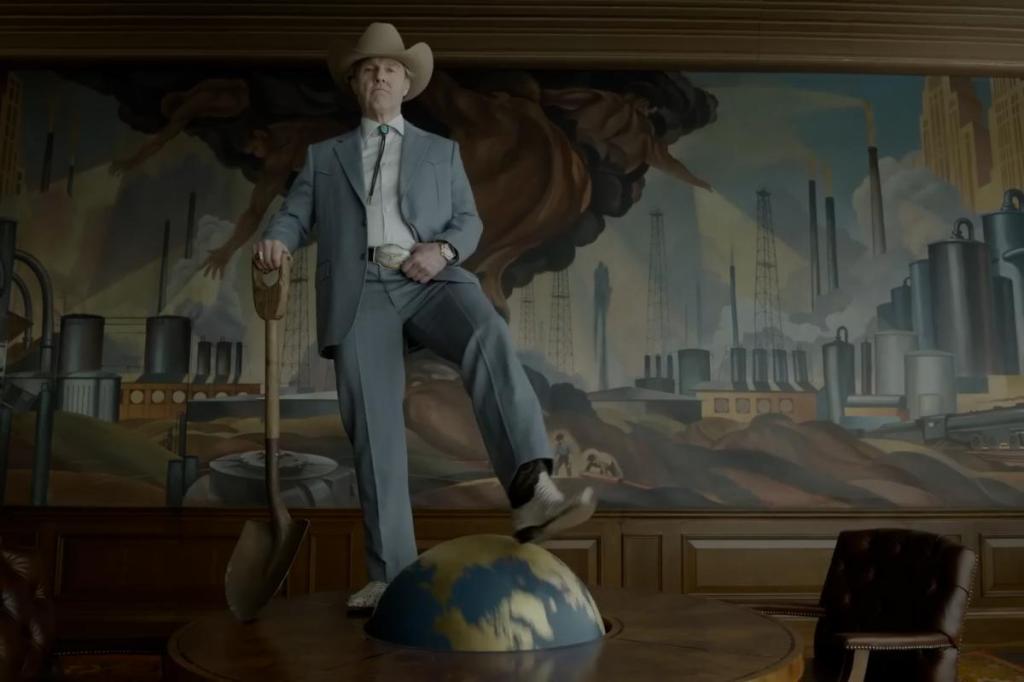
It’s been a few weeks, we’ve had time to simmer with Alejandro González Iñnáritu’s latest film, Digger. Starring Tom Cruise, Digger presents itself as “A Comedy of Catastrophic Proportions”, and the trailers really showed how bizarre Digger actually was tonally, with each character feeling incredibly exaggerative and it being immediately quite obvious what the film’s angle was. Many begrudged it before it had even premiered, citing its topic of satirizing global warming as trite and not looking to be particularly successful. To many, it appeared like pastiches of Kubrick, without what made a film like Dr. Strangelove work.
Personally, I was pretty excited for Digger, even with these vague trailers as they seemed intentionally withholding and Iñnáritu as a filmmaker certainly earns the benefit of the doubt. You could sense from these trailers that something was being hidden, and it became especially obvious when Digger premiered to a very divisive reception from critics, but they were unable to truly specify their issues without going into spoilers.
We are currently closer to the start of the 2030s than we are 2020 itself, and as we get further away from 2020, and specifically how 2020s cinema really started finding its voice in 2022. Digger feels like a film that exists in this post-COVID context, a culmination in many ways. When we look back on the 2020s for films, Digger will be a reference point.

A “Comedy” of Catastrophic Proportions
Before going into the weeds of post-COVID cinema, I wanted to discuss the film itself. Digger is one of the most exciting to discuss films of the year because it grapples with so many topics that the marketing doesn’t even suggest. That is, of course, that the weird Dr. Strangelove-like section in all the trailers is actually a stage play, and Digger Rockwell is actually just a character that is played by Curtis Markson in-universe.
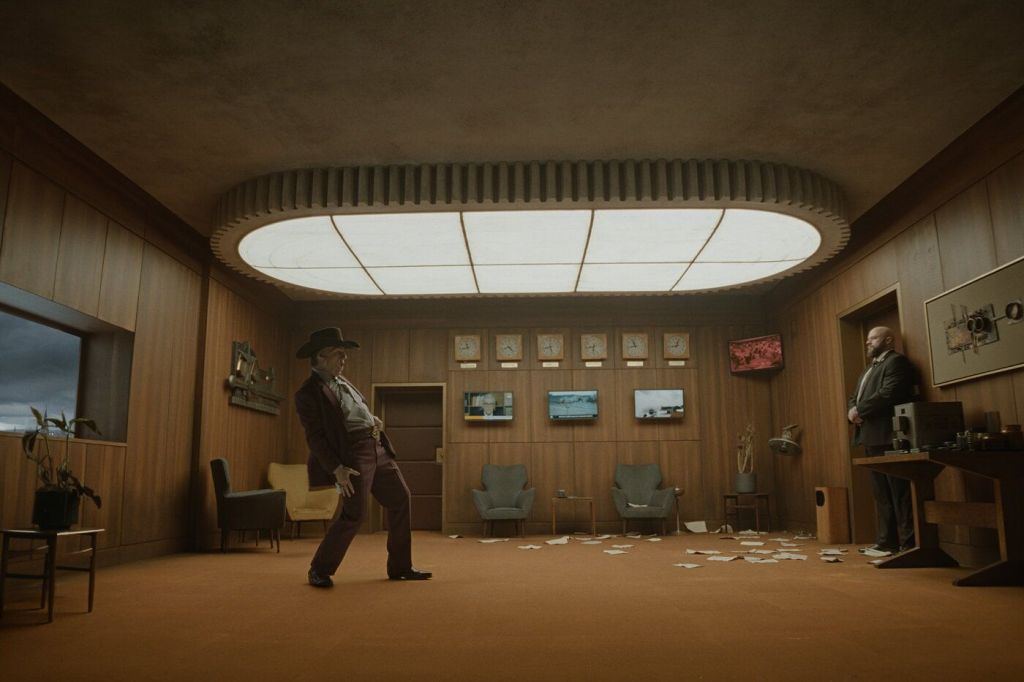
Personally, I quite enjoyed the opening satire section. It wasn’t really touching on anything new, but there was a really sinister undertone, and it was just flat out bizarre. The set looked so much like it was intentionally fake-looking, so I had assumed either it was a play, or it was just a stylistic choice.
The reveal of it being a stage play came way earlier than I had anticipated. Before the reveal, the scenes the film initially want you to take at face value are Digger Rockwell’s morning routine, his complete disregard for the impending climate crisis, his sister’s visit where she overreacts and makes the climate issue about her, then the discussions with the President. After a heart-to-heart between Digger and the President, the rug is pulled under our feet and we see alterations of the set dressing, and the “scene” cuts and we are no longer following Digger Rockwell, but instead Curtis Markson.
Those scenes before we know this were what lost many people as the source of the marketing, but it’s a very revealing part of the film, as it fills in the blanks in the film’s reality, and I don’t think the film’s message really lands as much without an earnest attempt at representing the kind of art that the film is criticising.
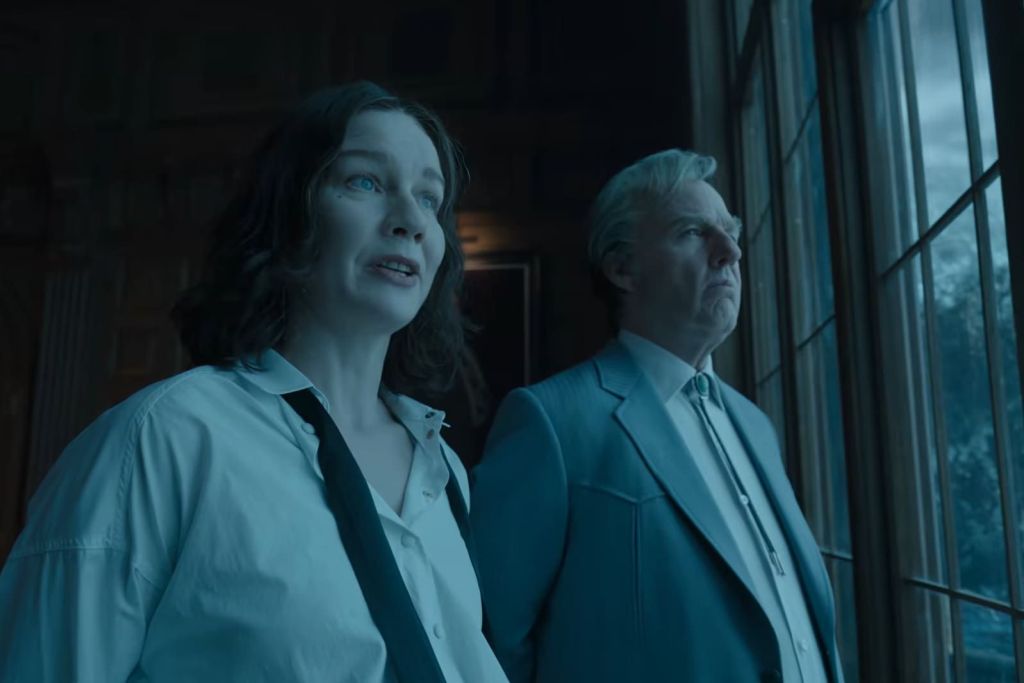
Many reviews initially stated Digger being excrutiating unfunny. With the poster’s tagline being “A Comedy of Catastrophic Proportions” that comment seems appropriate, but upon watching the whole thing it feels a little counterintuitive to critique that angle of the film. Comedy is subjective, I didn’t find that initial play section unfunny myself. It didn’t feel particulary different from other satires of a similar nature but I was enjoying it. With the hindsight of the actual film, it just feels like a weird critique.
However Digger is a film of many twists. After a few scenes in the play, that is called Fossil Fools, are shown being acted in-universe, now that the barrier has shattered and we know it’s not the main universe of the film we are watching. Jesse Plemons plays a producer called Kenny, and around halfway through the film Kenny drops the bomb that he is actually the nephew of Digger Rockwell. The events of Fossil Fools are actually real and this satire is an exaggeration of real events that caused actual tragedies.
This twist is phenonemal and Plemons as always sells Kenny Rockwell as a character. Kenny has a very sinister undertone, and the mask is completely off for Iñnáritu’s true message for his film. Digger is in many ways an anti-satire. Kenny’s monologue sums it up, as he says that making people laugh about stuff that caused devastation can help them escape their sad reality, but Kenny and his family are directly responsible for it. Funding Fossil Fools in a way is the Rockwell family and any rich, powerful person’s way to control the narrative. Another aspect is the fact Fossil Fools itself is a cult classic play, and Kenny’s version is actually for the 20th anniversary.
The megarich want to control the narrative, they want to make you laugh and forget the fact they could’ve avoided their sad reality if they hadn’t been greedy. Sophie Wilde as director is Iñnáritu’s dig at your Adam McKay in a way, an artist taking on a real issue without saying much on it, because film inherently can’t create change. It’s a pessimistic outlook, and some interpret this as calling movies pointless.. I think there’s more to it..
I have skipped over so many parts of this film in an attempt to reach to this conclusion. Riz Ahmed’s performance has to be my favourite as Ganesh, the source of truth, rational thinking and going slightly insane at the sight of certain dystopia. Digger and Ganesh’s flight to the EU Summit was one of my favourite scenes, and it leads into said EU Summit which is so striking. I’ve seen many people claim the EU Summit scene where Digger monologues about how everything he did was just in service of convenience we couldn’t live without. But that scene is not only from the perspective of the billionaire that created the issue, and its part of a piece of fiction in-universe that condemns Digger as a villain.. it shouldn’t be a reflection of what Iñnáritu is actually trying to say. Instead, that monologue highlights the excuse the powerful give to stay in power and to keep up their unsustainable greed. They will try to guilt you into being complicit.
There is so much more to Digger I haven’t mentioned. I got so much more from this movie than I expected going in. In many ways, it grapples with its own existence. As I mentioned earlier, it is a culmination of post-COVID cinema.. but what do I mean by that?

What Is Post-COVID Cinema?
In the context of this blog, it’s a term coined by myself, and I’m sure many others, but in its literal defintion it is the cinema influenced by directly or indirectly by the COVID years of 2020 and 2021.
COVID has had the biggest impact on my life than any other world event. It arguably stole part of my youth, and while it is why I am where I am right now, I wonder how different life would’ve been without it. I’m glad I am where I am now, but I feel like turning 18 during COVID mentally stunted me, and caused a lot of mental health problems for me and my generation.
It has completely changed the way we consume media, it has shifted the world to become more and more digital, and it has exposed so many people’s true nature. For me, COVID stopped being a thing in my life in 2022, and the subsequent years, cinema has had to recover. Top Gun Maverick was the great “return” being the first billion dollar club entry since 2019, and Everything Everywhere All At Once was widely celebrated and really resonated with both film fans and audiences.

Everything Everywhere is the most maximalist, absurd, weird yet deeply emotional action comedy meets family drama. It took the concept of a multiverse, realised it with the most stupid concepts, and anchored it with a beautiful generational trauma story. Why am I talking about EEAAO? Well, it is a huge part of Post-COVID cinema identity. People want something big, something loud, something that can sweep them away and I think that was as a result of feeling so closed off from the rest of the world for a couple years. The concept of multiverse is literal escapism, and dropping into the surreal life of Evelyn Wang literally escape her stressful life to go on a wild multiversal adventure is a premise that resonates with the zeitgeist. Of course, the film itself being good is a big part of why it resonated with people. It’s got that underlying message of hope. In the end, the mundanity of life can bog you down but it’s important not to give up and submit to nihilism.
The following year’s Poor Things had a similar buzz around it in its protagonist’s literal baby brain experiencing life and losing her innocence, portrayed in an extremely absurd and explicit way. It reaffirms the importance of human life, the loss of innocence but the journey we all take to find ourselves and form our own lives. Ultimately another hopeful message, and it resonated with people. Both EEAAO and Poor Things are weird, borderline inappropriate yet emotionally resonant with this theme of escapism and challenging the status quo.
Alternatively, you have the chaotic side of Post-COVID cinema like Eddington, the first film actually about COVID, about a dispute between a sheriff and the mayor of a small town during COVID, and the way it escalates really does reflect the lack of order at that time. I didn’t love this movie, but it is undeniably a portrait of that time. Nolan’s Oppenheimer grapples with the existential question of whether we have doomed ourselves by opening Pandora’s Box. One Battle After Another as I have written about argues that our future lays with the younger generation, but his depiction of the current landscape is bleak.
Each decade is going to be influenced by what’s happening in real life, but it feels so apparent that what is resonating with people in a post-COVID time is a mixture of hope, existential dread and chaos, often mixed into one maximalist film.

Digger feels like all of this, and many would argue it is entirely pessimistic and bleak. Iñnáritu took so many bold swings with the constant tug of war with what was and wasn’t reality, the built-in escapism with a fictional play that is then revealed to be escapism for people in-universe. As I said earlier, Digger is grappling with its own existence and condemns films like Don’t Look Up for being pointless as films trying to highlight real world issues. Digger‘s debate is if art funded by billionaires destroying the world, is it a satire or is it propaganda. It doesn’t pretend it’s changing the world, instead it’s telling us it isn’t and that ultimately art is released and at the mercy of the billionaires who fund them. It’s so deeply ironic with the recent Paramount-Warner merger.
Digger says so much and does it in such a way that keeps you guessing. Most people I know liked it, yet it was completely rejected by critics. Maybe the fact it insinuates films are useless is why.. even if I don’t believe that is what the film is arguing. In my opinion, Digger is actually saying that art can be weaponised and used to control a message. Fossil Fools is a cult classic before the events of the film, yet it’s now owned by the Rockwell family. I can’t think of a more relevant message, about how important art is, and how important it is to actually have something to say in a film, something that can actually inspire change instead of just making fun of stuff while taking funding from the people inadvertedly causing it. COVID has exposed the corporate world, there is less of this idolisation of billionaires like Elon Musk in the 2010s, and that’s because of the more apparent class divide these days. When Digger dies in the play, it’s this huge moment where everyone claps and cheers, and at that point, even as a villain, Digger remains relevant and known, even if that is through being despised, his image and his name are a brand and it’s inherently depressing that all these people have to hold onto now is their bitterness to him.
Pessimism or A Call for Action? Our Choice.
So, where does that leave us? Digger ends with a depressing image of how life is after billionaires destroyed the world, and the film criticises satirical movies calling them pointless. But Digger‘s reality isn’t our own.
We individually aren’t able to move mountains and change the decisions of billionaires, but the more we identify what they’re doing and see through the smokescreens, the more we can do to vote the right people in power. Unfortunately this is easier said than done, and our habits causing the climate crisis won’t be drastically changed.
Iñnáritu isn’t telling us we should go solve the climate crisis. The opposite really, this film isn’t actually about the climate crisis, it’s about art’s role in society, which is to express the feelings of the artist. All art is inherently political, and while making art about an issue does not do something on its own, with intent it can inspire audiences and it can make you think. Digger made me think for a while, it truly is the antithesis to a satire and a representation of post-COVID cinema.
Don’t just make a satire showing us all as idiots. Call out the billionaires who are destroying the world, and then bankrolling art to portray their actions in a certain way.
★★★★☆
8/10

